
Biofilm on food-prep surfaces: why a daily wipe isn't enough
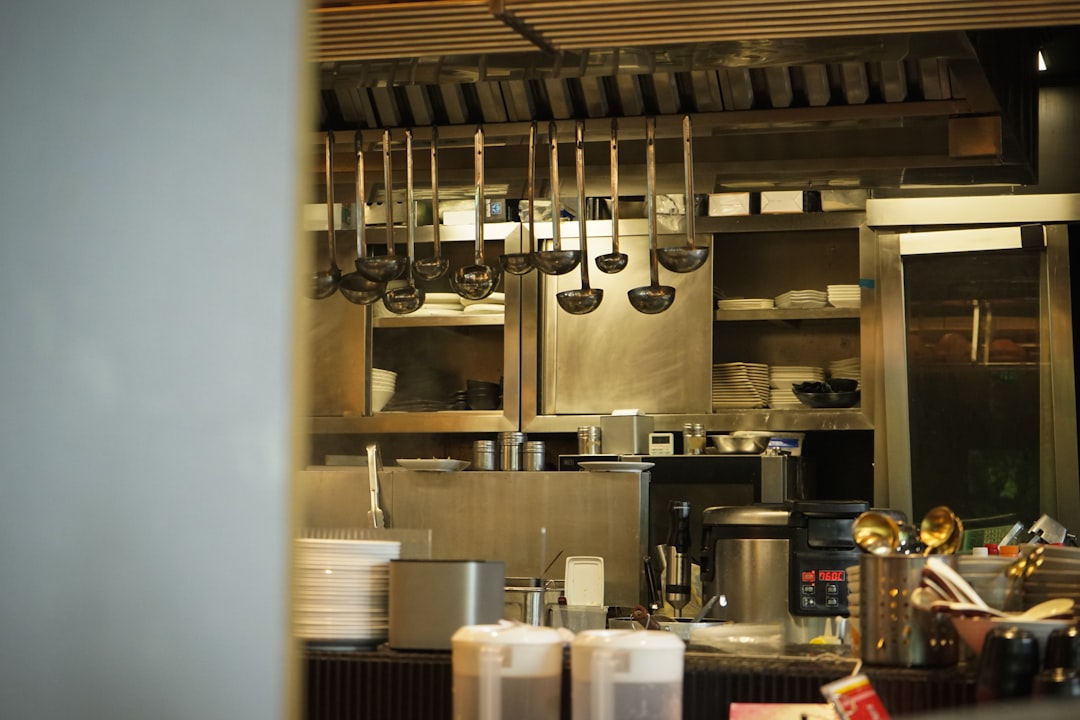
You wipe down the prep counter after every shift. The surface looks clean, smells clean, and passes a visual check. Yet cross-contamination events still happen, and your team cannot work out why.
The answer is often biofilm: a thin, structured community of bacteria that anchors itself to a surface, secretes a protective matrix, and becomes significantly more resistant to the disinfectants and sanitisers used in routine cleaning. It is not visible to the naked eye, and it does not smell until it is advanced. By the time you notice it, it has been there a while.
For F&B kitchens, food-processing facilities and institutional canteens in Singapore, biofilm on food-prep surfaces is a persistent and under-recognised problem. High humidity, constant moisture from food handling, and the warm ambient temperatures that come with a tropical climate all accelerate biofilm formation. A daily wipe addresses what is on the surface. It rarely addresses what has bonded to it.
Why this matters: Biofilm lets bacteria persist between cleans on the very surfaces where food is prepared, and ordinary disinfection is often not enough to remove an established community.
Highlights
- Biofilm is a structured microbial community that bonds to surfaces and is far harder to remove than planktonic (free-floating) bacteria
- Singapore's humid, warm conditions accelerate biofilm formation on food-prep surfaces, drains, sinks and equipment seams
- Routine wiping and spray-and-wipe disinfection typically cannot penetrate the protective matrix biofilm secretes
- The AEGIS Microbe Shield coating bonds permanently to the surface and mechanically ruptures bacteria and mould on contact, helping to inhibit microbial growth between cleans
- Treatment is non-leaching, so it does not wash off, transfer to food, or get used up during normal food-prep operations
What biofilm actually is, and why it is harder to remove than loose bacteria
Most people think of bacteria as individual cells floating in a liquid or sitting loosely on a surface. Planktonic bacteria in that state are relatively straightforward to remove with a disinfectant or a thorough clean. But given a stable surface, moisture and a source of nutrients (and food-prep surfaces provide all three in abundance), bacteria do something more organised.
They attach to the surface, begin to multiply, and collectively produce an extracellular matrix: a sticky, protective structure made of polysaccharides, proteins and nucleic acids. That matrix holds the community together, shields it from disinfectants, and makes mechanical removal with a cloth almost impossible without physically disrupting the substrate beneath.
The CDC has noted that biofilms, microbial cells that adhere to each other on a surface, require specialised disruption and disinfection approaches rather than conventional treatment alone. A spray-and-wipe routine designed for planktonic contamination simply does not reach the cells embedded deep in the matrix.
Where biofilm forms in a food-prep environment
Biofilm tends to concentrate in the spots that are hardest to clean thoroughly:
- Seams and joins where equipment meets the countertop
- Drain channels and the underside of drain covers
- Cutting-board surfaces, particularly any grooves left by knife marks
- Sink basins and the underside of taps
- Gaskets and seals on cold-room doors and refrigeration units
- Any surface with a textured or porous finish that traps moisture
Smooth, non-porous surfaces are easier to keep biofilm-free, but no surface is immune if moisture, warmth and nutrients are consistently present.
Why routine disinfection struggles to deal with an established biofilm
This is where many food-premises operators are surprised. They are using a properly diluted, food-safe disinfectant at the right contact time. On a clean surface with planktonic bacteria, it works well. On an established biofilm, the same product often achieves only a fraction of its rated efficacy because the matrix physically prevents the active ingredient from reaching the cells inside.
There is also a secondary problem: even if a disinfectant reduces most of the biofilm community, the matrix remnants and dead cell debris remain on the surface and act as a foundation for rapid re-colonisation. Without something that addresses the surface between cleaning events, the cycle restarts within hours.
In Singapore's kitchen environment specifically, that cycle is fast. Temperatures between cleans can sit above 28°C, and humidity is rarely below 70%. Both factors favour rapid bacterial growth once a cleaning agent has dried off.
When to call in professional treatment rather than trying to manage it yourself
If you are running a regular cleaning programme and still seeing recurring food-safety incidents, unexplained odours from drains or equipment seams, or surfaces that look clean but test positive on ATP swab checks, you likely have an established biofilm that routine cleaning alone cannot resolve.
A professional disinfection service can address the immediate bioburden. But disinfection is a single event: once it is complete, surfaces are open to recontamination. The more durable answer is to give those surfaces an ongoing capability to resist microbial attachment in the first place.
What you can manage yourself: regular cleaning with appropriate food-safe products, correct contact times, and physical scrubbing of high-risk areas like drain channels and cutting boards. What you cannot do easily yourself is treat the surface itself so that it works between cleans.
How a surface coating changes the equation
The AEGIS Microbe Shield coating works on a different principle from a conventional disinfectant. Rather than acting chemically and then dissipating, it is a silane quaternary-ammonium micropolymer that forms a permanent covalent bond with the surface. It does not sit on top of the surface; it becomes part of it.
Once bonded, it forms a positively-charged coating. Bacteria, mould and fungi carry a negative charge. When a microbial cell contacts the treated surface, the charge difference physically ruptures the cell membrane on contact. There is no chemical poison, no leaching agent, and no mechanism by which bacteria can develop resistance to a physical disruption of this kind. The cell membrane is mechanically destroyed.
Because the coating is non-leaching, it does not wash off during normal food-prep operations, does not transfer to food, and does not get used up over time. It continues to provide residual protection between cleaning events for the life of the treated surface. This is particularly relevant for food environments, where the coating holds its approvals under Health Canada PCP# 15133, US EPA reg. 64881-1 & 64881-7, EU PT-7 & PT-9 (REACH) and UK PT-2.
For a food-premises operator dealing with recurring biofilm on countertops, equipment surfaces and food-contact areas, this means the surface is no longer passive between cleans. It actively resists the initial microbial attachment that biofilm formation depends on.
What surfaces can be treated, and how treatment is verified
The coating works on the materials most commonly found in commercial kitchens: stainless steel, glass, plastic, wood and textiles. It can be applied to prep counters, equipment exteriors, door handles, refrigeration seals and high-touch areas throughout the premises.
Treatment can be field-verified using the bromophenol-blue (BPB) test, which confirms that the coating is present and active on the surface. This gives food-safety managers an auditable verification step rather than simply taking the treatment on trust. For premises subject to SFA or NEA inspection, having a verifiable surface-protection layer is a meaningful addition to the documented cleaning programme.
For a broader look at how infection threats compare across different control methods, the article on prevalent infection threats and prevention methods gives useful context. And if you are assessing where disinfection ends and a longer-term surface treatment begins, the piece on sanitation versus disinfection is worth reading alongside this one.
Schools and high-traffic institutional facilities deal with the same surface-protection challenge: Branksome Hall's use of AEGIS Microbe Shield on high-touch areas shows how the approach scales beyond food environments.
Frequently asked questions
Will the coating affect food safety or come into contact with food?
The AEGIS Microbe Shield is non-leaching: it bonds covalently to the surface and does not transfer to food, dissolve into liquids or shed particles during normal use. It carries regulatory approvals including US EPA reg. 64881-1 & 64881-7 and Health Canada PCP# 15133. For specific food-contact surface applications, we assess the surface type and use pattern before treatment.
Can the coating be applied over an existing biofilm, or does the surface need to be clean first?
The surface must be properly cleaned and, where an established biofilm is present, remediated before the coating is applied. The coating bonds to the surface, not to a biofilm layer. A professional disinfection treatment first, followed by the surface coating, is the correct sequence for premises with an active contamination problem.
How do we know the coating is still working after months of cleaning?
Treatment can be verified in the field using the bromophenol-blue (BPB) test, which detects the presence and activity of the coating on the surface. This gives you an auditable check rather than relying on visual inspection. Where a surface has been damaged or heavily abraded over time, re-application to that specific area may be appropriate.
Does the coating remove the need for our regular cleaning programme?
No, and it is important to be clear about this. The coating provides residual protection between cleans by rupturing bacteria on contact, but it does not remove soiling, grease or food debris. Regular cleaning remains essential. What the coating does is ensure the surface is not passively accumulating a microbial community between each clean.
Which food-premises types benefit most from surface coating?
Any food environment with high-touch, hard-to-clean or constantly-moist surfaces gains the most. Commercial kitchens, food-processing facilities, institutional canteens, food-court stalls and cold-room interiors are all strong candidates, particularly where biofilm on food-prep surfaces has been a recurring problem despite a consistent cleaning programme.
Biofilm is not a failure of hygiene discipline; it is a structural problem that routine cleaning was not designed to solve. Giving the surface itself the ability to resist microbial attachment is what closes the gap.
Ready to protect your food-prep surfaces between cleans?
Request a Quote or contact us directly:
- Call: 6241 9443
- WhatsApp: 9222 9222
- Email: info@aegisasia.com
Get a free quote