
Disinfection vs antimicrobial coating: what a Singapore F&B operator actually needs to pass an audit
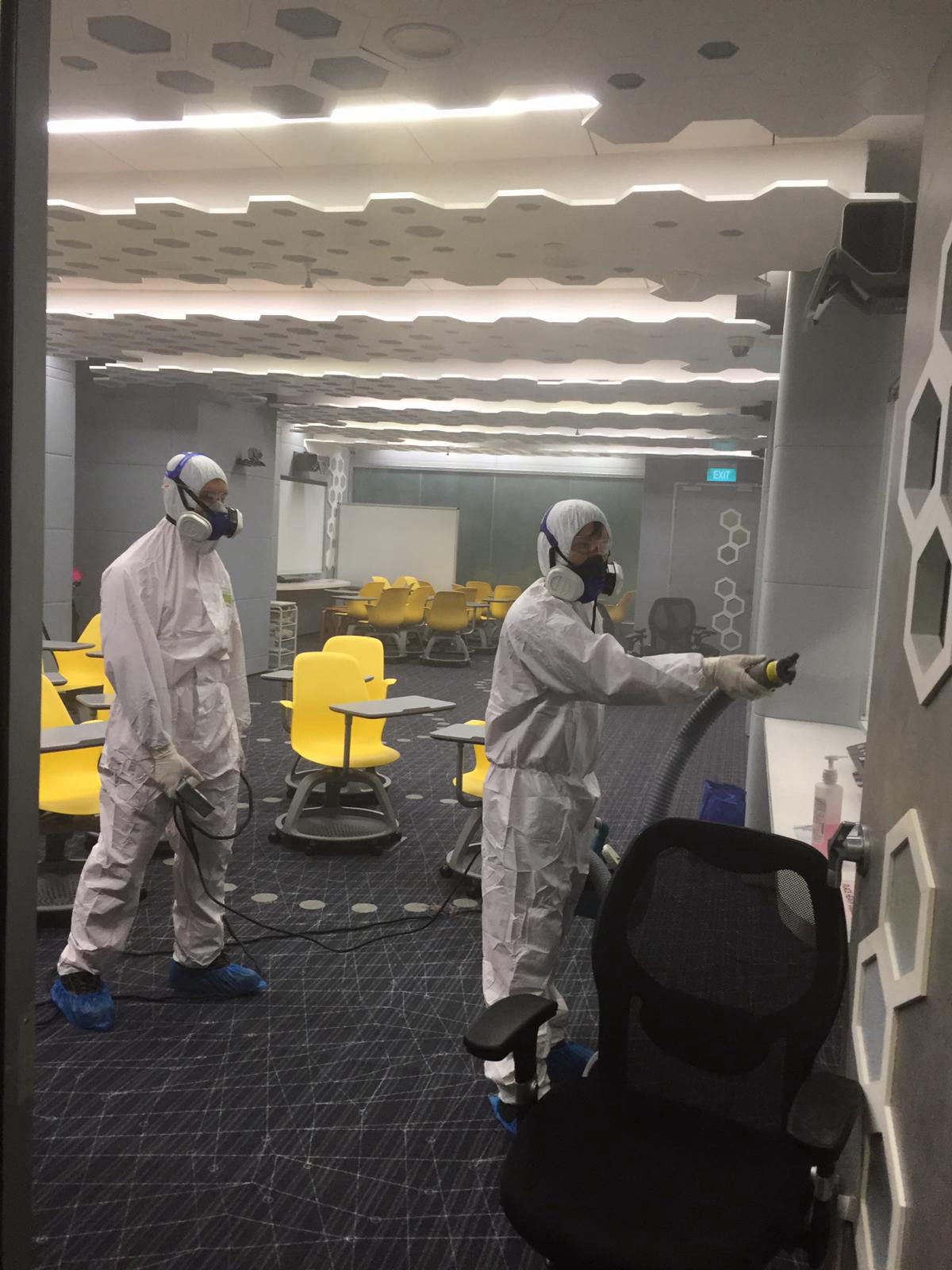
An unscheduled NEA inspection is rarely announced. The inspector walks in at 10 am, an hour after your morning sanitisation round finished, and what they find on your counter surfaces, handles and prep equipment is exactly what has accumulated since your crew put the spray bottle away.
For many F&B operators, that gap between cleans is the problem. Scheduled disinfection works precisely as long as the disinfectant is wet and active. Once it dries, the surface is open again. Bacteria on a staff member's hand, on a delivery crate, on a customer's bag placed briefly on the counter, any of it can recontaminate a surface within minutes of a clean.
Understanding the difference between disinfection and an antimicrobial surface coating is not just useful theory. For a food-premises operator in Singapore, it is the difference between a surface hygiene programme that looks good on a schedule and one that holds up when the inspector arrives unannounced.
Why this matters: NEA and SFA inspectors assess surface hygiene at the moment they arrive, not at the moment your last cleaning round ended.
Highlights
- Scheduled disinfection gives a surface a clean slate; the moment it dries, recontamination can begin.
- An antimicrobial coating bonds to the surface and keeps rupturing bacteria on contact between cleans.
- The AEGIS Microbe Shield is a non-leaching silane quaternary-ammonium micropolymer, approved under Health Canada PCP# 15133, US EPA reg. 64881-1 & 64881-7, EU PT-7 & PT-9 (REACH) and UK PT-2.
- Treatments work on plastic, metal, glass, wood and textiles, the surfaces in a typical F&B premises.
- A treated surface can be field-verified on site with a BPB test, giving you a result you can show an inspector.
What disinfection actually does, and where it stops
Disinfection is essential. A properly applied disinfectant at the right concentration and contact time will achieve a significant reduction in surface bioburden. It clears the slate. For food-contact surfaces, that reset is required under SFA licensing conditions, and NEA's Environmental Public Health Act sets enforceable standards for licensed food premises that make regular disinfection non-negotiable.
But the reset is only a moment. According to the US EPA's own guidance on residual antimicrobial coatings, the key limitation of conventional disinfection is that it cannot protect a surface every time someone new touches it, and in a busy F&B kitchen or service counter, surfaces are touched constantly.
The gap between cleans is the real risk
Most food-premises operators run a disinfection schedule: surfaces wiped and treated at opening, at close, and at intervals during service. That schedule is sensible. The difficulty is what happens between those intervals on a surface that sees hundreds of hand contacts per hour.
When a piece of equipment is touched by multiple staff members, when a delivery worker leans on the counter, when a customer handles a condiment tray, the surface bioburden climbs again almost immediately. By the time your next scheduled round arrives, a well-run disinfection programme may still be cleaning surfaces that have been recontaminated for the past two hours.
For an inspector who walks in mid-service, the schedule on paper tells them your intent. The surface itself tells them the result.
How an antimicrobial coating closes the gap
The AEGIS Microbe Shield coating works on a different principle from a disinfectant. Rather than being applied, doing its work and evaporating, it bonds chemically to the surface as a silane quaternary-ammonium micropolymer. Once cured, it forms a positively charged coating that mechanically ruptures the cell membranes of bacteria, mould, fungus and their allergens on contact.
The critical distinction is that it is non-leaching. It does not dissipate between cleans, does not transfer to hands or food surfaces in a harmful way, and does not get used up. The coating is there the moment a surface is touched, and it is still there when the next person touches it an hour later.
This is not a replacement for your disinfection schedule, it is what works in the interval between rounds. As the EPA notes, surface-active coatings serve as an additional barrier, not a substitute for regular cleaning. Your cleaning programme still needs to run. What the coating does is ensure the surface is not sitting unprotected between those rounds.
What surfaces can be treated in an F&B premises
The coating is effective on the materials common to food premises:
- Stainless steel prep counters and equipment surfaces
- Plastic handles, knobs and control panels
- Glass display surfaces and sneeze guards
- Wooden furniture and service fixtures
- Textile seating in dining areas
Food-contact surfaces are treated and allowed to cure before use. The coating does not introduce a leaching chemical into food; its mechanism is physical, not chemical release.
Field verification: showing an inspector the result
One practical advantage of the AEGIS Microbe Shield coating that matters specifically for audit readiness: a treated surface can be verified in the field. The bromophenol-blue (BPB) test detects the presence of the quaternary-ammonium coating on a surface, giving a visible, on-site result. You do not need a laboratory report to confirm coverage. You can show an inspector, or your own QA process, that the coating is present on a given surface at a given time.
This kind of verifiable, documented protection is precisely what a structured disinfection service programme, combined with a coating layer, gives a licensed food premises: both a cleaning record and a surface that is actively working between entries in that record.
Disinfection vs coating: choosing the right combination
The question is not whether to disinfect or to coat. In a licensed food premises, both have a role. The practical question is what each one does and does not cover.
|
|
Scheduled disinfection |
AEGIS Microbe Shield coating |
|---|---|---|
|
When it works |
During and immediately after application |
Continuously, between every clean |
|
What it removes |
Existing surface bioburden |
Microbes on contact, as they arrive |
|
How long it lasts |
Until the product evaporates or is touched |
For the life of the treated surface |
|
Recontamination risk |
Begins as soon as the surface dries |
Reduced between cleans |
|
Field-verifiable |
No |
Yes, by BPB test |
|
Regulatory approvals |
Per product |
Health Canada, US EPA, EU PT-7 & PT-9, UK PT-2 |
A food-premises operator who runs scheduled disinfection only is leaving the surfaces unprotected for the longest parts of the day. An operator who also applies a residual coating is giving those surfaces a layer of protection that works through the service period.
When to prioritise remediation first
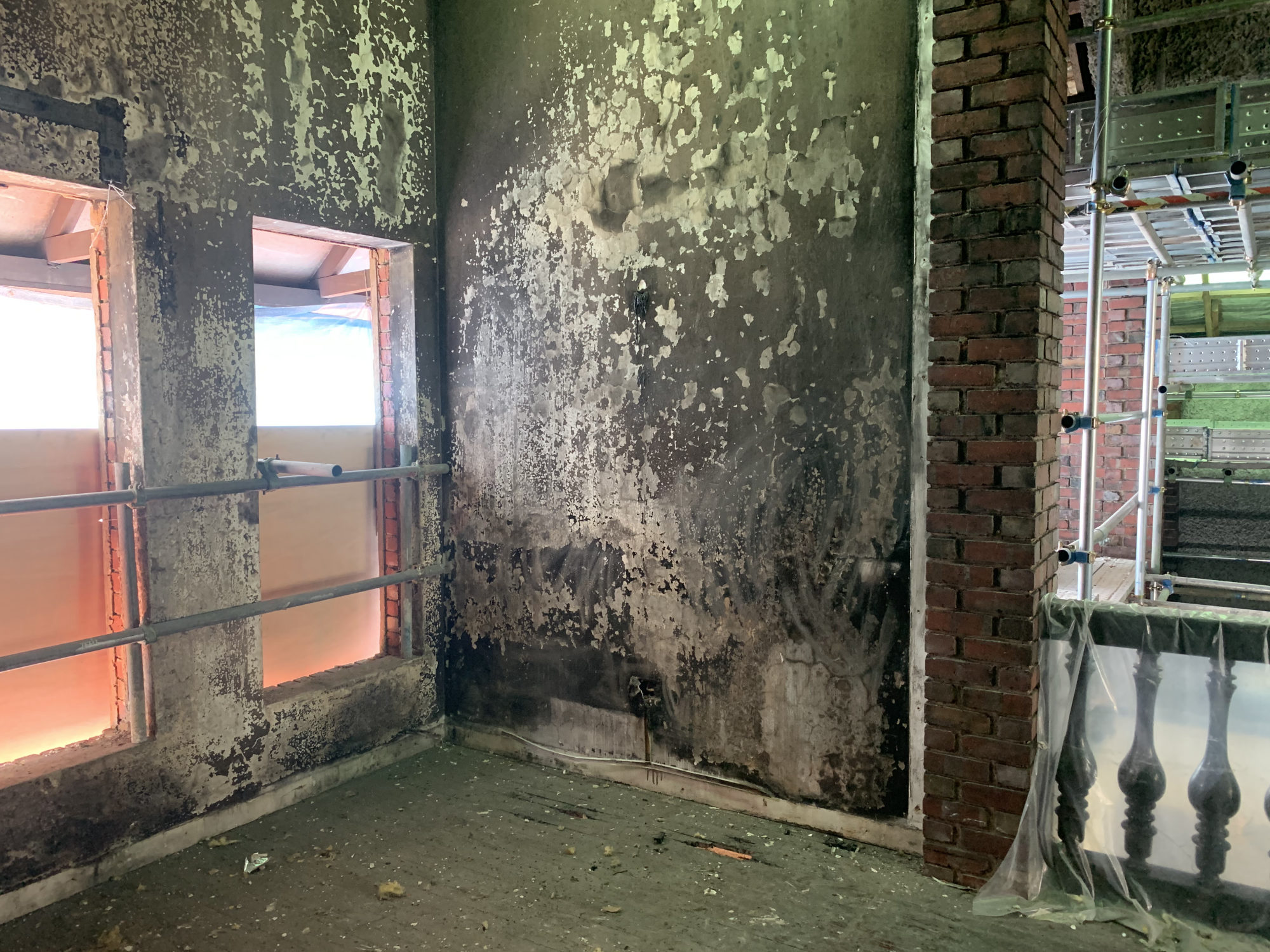
If there is an active mould or bacterial contamination issue, visible mould growth, persistent odour from drainage areas, or surfaces that have not been properly maintained, a coating applied over an active contamination source will not fix the underlying problem. Remediation comes first. The mould and bacteria remediation service addresses the source; the coating then protects the clean surface. Applying a coating to an unresolved contamination is not something we recommend, and it is something we will say plainly on a site visit.
Similarly, a coating cannot substitute for fixing a structural water ingress problem or a failing drainage point. The surface work follows once the root cause is dealt with.
Frequently asked questions
Will a surface coating interfere with our regular food-safe cleaning products?
No. The AEGIS Microbe Shield coating is designed to be compatible with routine cleaning and will not be removed by standard food-safe detergents or sanitisers used in a normal cleaning programme. It is non-leaching and bonds to the surface at a molecular level, so washing the surface as usual does not strip it. Your existing cleaning schedule continues unchanged.
Can the coating be applied to food-contact surfaces?
Yes, in most cases. The coating bonds to the surface and does not leach into food once cured. We assess each surface type on a site visit and confirm suitability before treatment. Food-contact surfaces are allowed to cure fully before being returned to use. If a specific surface is not suitable, we will say so.
How do I know the coating is still working after a few months?
A treated surface can be verified on site using the BPB (bromophenol-blue) field test, which detects the presence of the coating. This gives a visible, documentable result without a laboratory. For a food premises managing audit evidence, this means you have a straightforward way to confirm and record that the coating remains on a treated surface.
Does having the coating mean we can reduce our disinfection frequency?
The coating is a complement to your cleaning and disinfection programme, not a replacement. NEA and SFA requirements for licensed food premises set minimum cleaning standards that remain in force regardless of any surface treatment. What the coating does is ensure surfaces are actively working between cleans, so the gap in your schedule is no longer an unprotected gap. Your disinfection frequency stays what compliance requires.
What happens during an NEA or SFA audit if we have the coating?
The coating does not change your statutory obligations, but it does give you two practical advantages: a surface that is actively reducing bioburden between cleans at the time the inspector arrives, and a field-verifiable treatment that can be demonstrated on site with a BPB test. A documented coating programme, combined with your cleaning records, shows an inspector a layered hygiene approach rather than a schedule alone.
A disinfection schedule tells an inspector what you intend to do. A non-leaching antimicrobial coating, verified by a field test and backed by regulatory approvals, tells them what the surface is doing right now.
Get a free quote