
Sanitisation vs antimicrobial coating for food premises: what Singapore's hygiene audits actually require
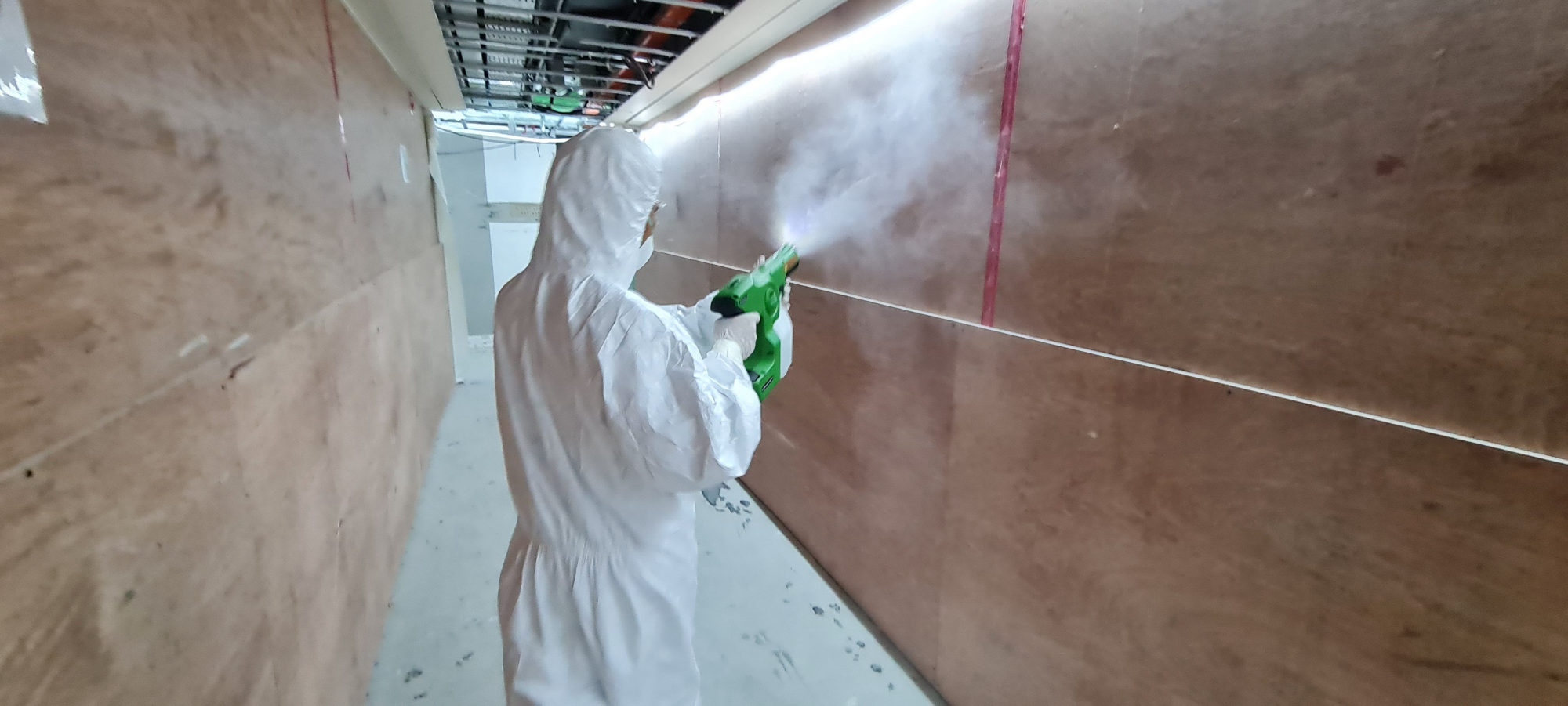
You sanitise your prep surfaces every few hours. The audit inspector still finds elevated bioburden on the chopping block, the tap handle, the door push-plate into the kitchen. The problem is not that you are skipping the chemical step. It is that a sanitiser does exactly what it is designed to do: reduce the microbial load at that moment, then stop working the instant the surface dries.
For Singapore F&B operators and food manufacturers, that gap matters. NEA hygiene audits and SFA licensing checks assess surface condition at the point of inspection, but they also look at whether a premises has a credible, continuous hygiene programme, not just a one-off wipe-down timed to the visit. Understanding what auditors actually assess, and where a surface coating fits into the picture, is the clearest way to close that gap.
This is not about choosing one approach over the other. It is about knowing which tool does what, and how they work together.
Why this matters: A food premises that relies on scheduled sanitisation alone leaves its surfaces unprotected between each clean, and that is precisely the window an audit inspector, and a contamination event, can exploit.
Highlights
- NEA and SFA auditors assess surface bioburden and food-contact zone hygiene, not just whether a sanitisation schedule exists on paper.
- A chemical sanitiser reduces microbial load at the moment of application; once it dries, the surface is open to recontamination.
- The AEGIS Microbe Shield is a silane quaternary-ammonium micropolymer that bonds to the surface and mechanically ruptures bacteria, mould and fungus on contact. It does not leach, wash off or get used up between cleans.
- It works on the plastic, metal, glass and textiles common in a commercial kitchen or food-manufacturing environment.
- Treatment can be field-verified on-site using the bromophenol-blue (BPB) test.
- Approved under Health Canada PCP# 15133, US EPA reg. 64881-1 & 64881-7, EU PT-7 & PT-9 (REACH) and UK PT-2.
What a Singapore food-premises hygiene audit actually checks
Surface bioburden and food-contact zones
NEA hygiene audits under the Environmental Public Health Act, and SFA licensing inspections for food establishments, both pay close attention to surface cleanliness in food-contact zones: chopping boards, prep counters, sinks, equipment housings, and the high-touch non-food surfaces that connect the kitchen to the dining area (door handles, tap fittings, refrigerator seals, light switches). An auditor does not simply tick that a cleaning schedule is posted on the wall. Surface swabs, visual assessment for biofilm or mould, and the general condition of food-contact surfaces are all in scope.
Biofilm is the specific concern on stainless-steel prep surfaces and drains. Once a biofilm colony establishes, routine surface cleaning rarely removes it fully. An audit finding on biofilm typically triggers a remediation requirement before the premises can pass a re-inspection, and that is a different intervention from a standard sanitisation cycle.
Residual protection between scheduled cleans
The inspection point that catches many operators off-guard is the assessment of what the surface looks like between cleans, not just immediately after one. In a busy kitchen, a prep counter can be re-contaminated within minutes of sanitising, from cross-contact with raw produce, airborne droplets, or a food handler's gloved hand. An auditor who arrives at a random time during service is seeing the surface in its working state, not its just-cleaned state.
That is the window a non-leaching antimicrobial coating addresses. It does not replace the sanitisation step, but it gives the surface a residual layer of protection that keeps working in the period between each scheduled clean.
How sanitisation and an antimicrobial coating work differently
What a chemical sanitiser does
A food-grade sanitiser (quaternary ammonium compounds, hypochlorite-based products or peracetic acid formulations approved for food-contact use) works by chemical action: it disrupts the microbial cell through contact, reducing the surface bioburden rapidly. SFA and NEA requirements specify both the product type and the contact time for food-contact surfaces. Done correctly, a sanitise step delivers a significant reduction in surface bioburden at the moment of application.
What it cannot do is maintain that reduction. The moment the sanitiser evaporates or is wiped off, the surface is inert again. It has no residual mechanism. The next person to touch the door handle, or the next splash of raw poultry juice on the counter, starts the contamination cycle again from zero.
This is not a flaw in the product; it is by design. Chemical sanitisers are formulated for rapid efficacy and safe removal from food-contact surfaces. The trade-off is that their effect ends with the application.
What the AEGIS Microbe Shield coating does
The AEGIS Microbe Shield coating works on a different mechanism entirely. It is a silane quaternary-ammonium micropolymer that forms a permanent covalent bond with the surface on application. Once cured, it creates a positively-charged coating that mechanically ruptures the cell membranes of bacteria, mould and fungus on contact. Because the action is physical rather than chemical, microbes cannot develop resistance to it in the way they can adapt to repeated antibiotic or biocide exposure.
Critically, the coating is non-leaching: it does not dissolve, transfer to food, or get used up by contact. It stays on the surface and keeps working between scheduled sanitisation cycles. On a stainless-steel prep counter, a plastic cutting board, a metal door handle, or a glass food-display surface, the coating provides continuous residual protection for the life of the treated surface.
The coating is entirely separate from the food-contact sanitisation step. The two work in series: sanitise on schedule (as required), and let the coating handle the period in between.
|
|
Chemical sanitiser |
AEGIS Microbe Shield coating |
|---|---|---|
|
Mechanism |
Chemical disruption of microbial cells |
Physical rupture of cell membranes |
|
When it works |
During and immediately after application |
Continuously, between cleans |
|
Residual protection |
None once dry |
Yes, for the life of the surface |
|
Leaches or transfers |
Removed after contact time |
Non-leaching, does not transfer |
|
Surfaces (food premises) |
Food-contact surfaces per label |
Plastic, metal, glass, textiles |
|
Field-verifiable |
No standard on-site test |
Yes, BPB test |
|
Replaces scheduled cleaning |
No |
No |
Understanding where each tool fits
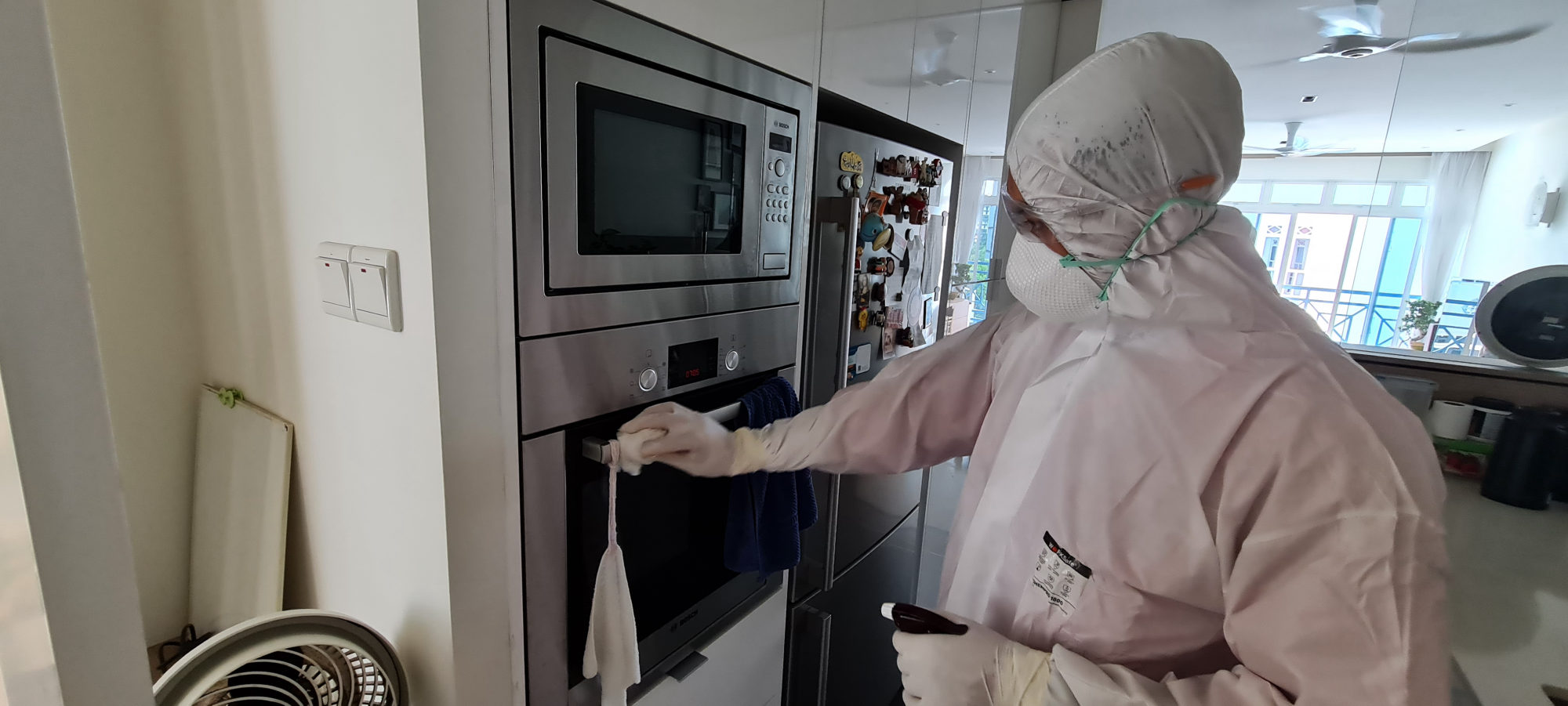
For a food-premises operator preparing for an NEA audit or recovering from an adverse finding, the practical read is straightforward. Your scheduled sanitisation programme is non-negotiable: it satisfies the documented hygiene requirement, delivers the bioburden reduction needed on food-contact surfaces, and is what the audit schedule is built around. Nothing replaces it.
An antimicrobial surface coating adds a second layer that works in the gaps. It is most valuable on the high-touch zones that are hard to sanitise continuously during a busy service: door handles, equipment buttons, cabinet pulls, light switches, tap fittings. It also adds measurable residual protection to prep-counter and equipment surfaces between each scheduled sanitise cycle. Read the article on today's prevalent infection-control methods for a broader comparison of approaches.
When remediation must come first
A coating protects a clean, intact surface. It is not a remedy for an active contamination problem, and treating a surface that has not been properly prepared will produce a poor result.
If a hygiene audit flags any of the following, remediation comes before any coating application:
- Visible mould or mildew on walls, ceilings or equipment in the kitchen or cool room.
- Biofilm on drains, sink basins or prep surfaces that does not respond to routine sanitisation.
- Persistent odour from drains or cavities, suggesting organic accumulation.
- A surface that is cracked, porous or degraded, where mould or bacteria are embedded below the surface layer.
In those cases, the right sequence is mould and bacteria remediation first, then surface preparation, then coating. The coating provides ongoing protection once the source is resolved. Applying it to an untreated contaminated surface will not resolve the underlying problem, and attempting to do so would waste the treatment and potentially produce a false result on the BPB verification test.
For premises without an active contamination finding, where the audit concern is residual protection between cleans rather than a visible mould or biofilm issue, the coating can typically be applied directly after a thorough clean and sanitisation of the target surfaces.
Frequently asked questions
Does the antimicrobial coating count as part of our NEA-required sanitisation programme?
No, and it is not designed to. The coating is a residual protection layer that works between your scheduled sanitisation cycles, not a replacement for them. Your documented sanitisation programme, using food-grade sanitisers at the correct concentration and contact time, remains the required foundation. The coating complements it by protecting surfaces in the gaps between each clean.
Is the coating safe on food-contact surfaces?
The AEGIS Microbe Shield is non-leaching: it bonds to the surface and does not transfer to food or dissolve on contact. It has been reviewed under regulatory frameworks including US EPA reg. 64881-1 & 64881-7 and Health Canada PCP# 15133. That said, we recommend discussing your specific food-contact surfaces and audit requirements with us before treatment, so we can confirm the right application for your premises.
What surfaces in a commercial kitchen are typically treated?
The most common targets are high-touch non-food-contact surfaces: door handles, tap fittings, equipment buttons, refrigerator seals, light switches, cabinet pulls and service counters. Prep-area surfaces (stainless steel, food-grade plastic) can also be treated. The coating works on plastic, metal, glass and textiles, which covers most surfaces in a standard commercial kitchen or food-manufacturing environment.
How do we know the coating is actually there and working?
The AEGIS Microbe Shield can be field-verified using the bromophenol-blue (BPB) test: a simple on-site check that confirms the presence of the positively-charged coating on the treated surface. Read more about how the BPB field-detection test works. This gives facilities managers and audit-preparation teams an objective reference point, not just a technician's word that the job was done.
We had an audit finding for biofilm on our prep surfaces. Can a coating fix that?
Not directly, and we would not treat a surface in that condition without remediation first. Active biofilm needs to be broken down and removed before a coating is applied; trying to coat over it will not resolve the underlying colony and the treatment will not bond correctly. The right starting point is professional bio-decontamination or remediation of the affected surfaces, then coating to protect against recurrence.
A food premises that has worked through a remediation and then applied a verifiable, non-leaching antimicrobial coating to its high-touch and prep surfaces is in a materially stronger position heading into the next inspection than one relying on scheduled sanitisation alone.
Ready to protect your food premises between cleans? Contact Aegis Asia to discuss your surfaces and audit requirements. Request a Quote, call us on 6241 9443, WhatsApp 9222 9222, or email [email protected].
Get a free quote