
Surface infection control in Singapore aged care: why a daily disinfection round leaves residents exposed
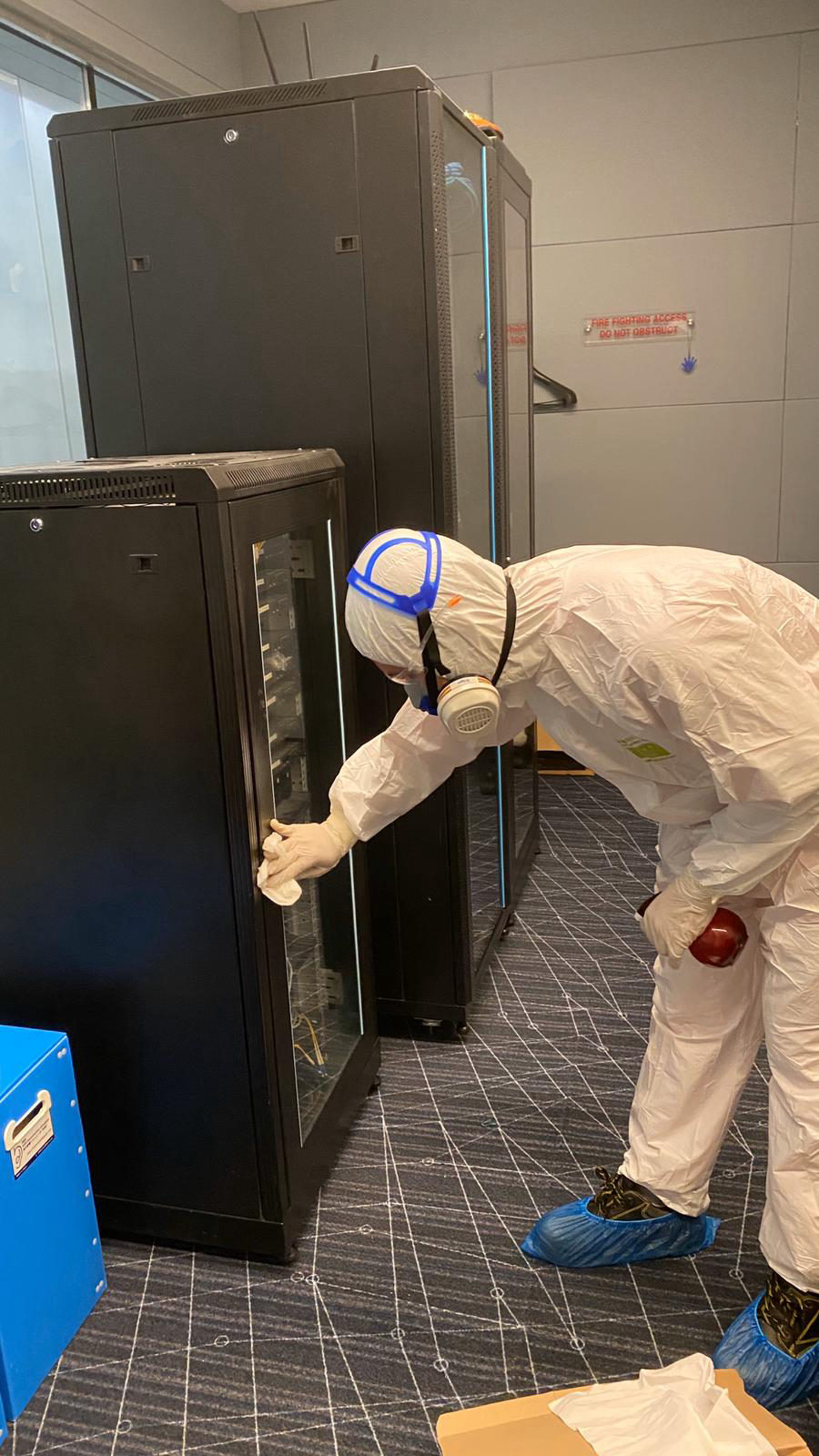
A nursing home or step-down care facility is not a typical commercial space. Residents are older, often immunocompromised, and they share surfaces constantly: bed rails, nurse-call buttons, wheelchair armrests, tap handles, dining table edges. Between one cleaning round and the next, those surfaces are touched dozens of times. Whatever the morning disinfection removed is back before lunch.
Facilities managers and Directors of Nursing across Singapore know this. The schedule looks solid on paper. Staff are trained and conscientious. But a conventional disinfectant works only in the moment it is applied. The moment it dries, the surface is open again.
The gap is not the cleaning round itself. The gap is the hours between rounds, and in aged care, that gap carries real consequences.
Why this matters: Elderly residents in Singapore nursing homes face a higher risk of healthcare-associated infections precisely because shared high-touch surfaces recontaminate within minutes of a routine disinfection round, leaving no protection between cleans.
Highlights
- Nursing home infection control in Singapore depends on more than a scheduled disinfection round. Surfaces recontaminate within minutes of drying.
- Elderly residents are at heightened risk from healthcare-associated infections spread via shared high-touch surfaces: bed rails, call buttons, wheelchair armrests, tap handles.
- The AEGIS Microbe Shield is a silane quaternary-ammonium micropolymer that bonds to a surface and mechanically ruptures bacteria, mould and fungus on contact.
- It is non-leaching, so it does not wash off or get used up between cleans, giving residual protection for the life of the treated surface.
- Treatments can be field-verified with a simple BPB test and are approved under Health Canada PCP# 15133, US EPA reg. 64881-1 & 64881-7, EU PT-7 & PT-9 (REACH) and UK PT-2.
Why high-touch surfaces in aged care are a special case
The recontamination problem that every schedule misses
Conventional disinfection, fogging, spray-and-wipe, alcohol wipes, kills what is on the surface at the moment of contact. No residual, no memory. A nurse-call button that is disinfected at 8 a.m. is handled by residents, staff and visitors through the morning. By 10 a.m. it carries a fresh bioburden. The next cleaning round is hours away.
For a healthy adult in a low-risk environment, that is manageable. For an elderly resident with reduced immune function, the repeated exposure to pathogens on shared surfaces is a different matter. Environmental cleaning and disinfection is a critical element of infection prevention in healthcare settings, as the WHO notes in its infection prevention and control guidance. The surface is only as protected as the last wipe, and the protection ends the moment the disinfectant evaporates.
What surfaces carry the highest risk in a nursing home
Through our work in healthcare and step-down care facilities across Singapore, the highest-traffic contact points are consistent:
- Bed rails and bedsides
- Nurse-call buttons and remote controls
- Wheelchair armrests and push handles
- Shared dining table surfaces and chair arms
- Tap handles and flush buttons in shared bathrooms
- Lift buttons and corridor handrails
- Reception counters and visitor sign-in areas
These are the surfaces that need to keep working between cleans, not just during them.
What residual surface protection actually means
How the AEGIS Microbe Shield works, and why it is different
The AEGIS Microbe Shield coating is a silane quaternary-ammonium micropolymer. When applied to a surface, it bonds chemically and forms a positively-charged coating. Bacteria, mould and fungi carry a negative charge. On contact with the treated surface, the coating ruptures their cell membranes mechanically. There is no poison released, no residue that transfers, no active ingredient that washes off or gets used up.
This is what non-leaching means in practice: the surface keeps working between cleans. A bed rail treated with the AEGIS Microbe Shield does not stop protecting at 10 a.m. It carries that protection for the life of the surface. Routine cleaning and disinfection rounds can continue unchanged, the coating is compatible with normal cleaning, and now the surface is never simply open between rounds.
When treatment works well, and when remediation comes first
A coating protects the surface it is applied to. It cannot fix an active mould source, a water-damaged substrate, or a contamination problem that originates behind a wall or under a floor. If a nursing home has visible mould growth or persistent moisture, mould and bacteria remediation needs to come before any coating treatment. Coating over an active problem does not resolve the root cause.
For facilities with controlled environments where the challenge is microbial recontamination between cleans, which describes most well-maintained aged care settings in Singapore, the coating is straightforward to apply and verify.
How treatments are verified
One practical concern for a Director of Nursing or facilities manager is accountability. How do you know the coating is actually there? We field-verify every treatment using the bromophenol-blue (BPB) test, which gives a visible, on-site result. There is no need to send samples to a lab or take anything on faith. The treated surface shows its charge, and the result is documented.
Approvals are formal and multi-jurisdictional: Health Canada PCP# 15133, US EPA reg. 64881-1 & 64881-7, EU PT-7 & PT-9 (REACH) and UK PT-2. For aged care operators who need to demonstrate due diligence to MOH or accreditation bodies, that regulatory record is part of the documentation.
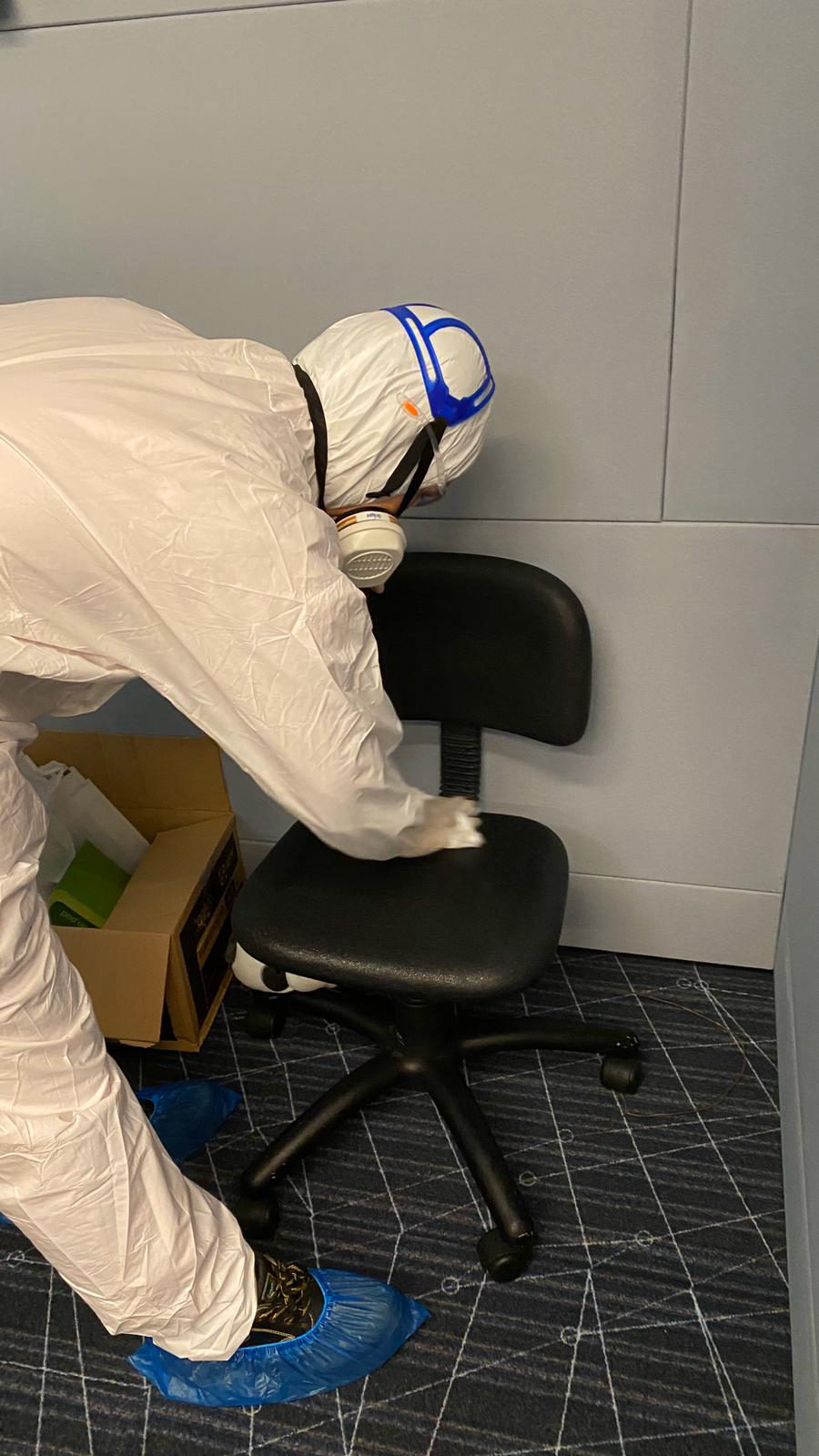
Putting it together: what a treated aged care facility looks like operationally
The coating does not replace your disinfection programme. Your team keeps their rounds; infection control protocols stay in place. What changes is that the surfaces between those rounds are no longer unprotected.
Practically, a treatment for a nursing home or step-down care facility covers the high-touch surfaces across common areas, resident rooms, shared bathrooms and corridors. We work around occupancy wherever possible. Most treatments can be staged so residents are not displaced. Once applied, the coating needs no special maintenance beyond your normal cleaning regime.
For a sense of how this works in a comparable high-contact environment, the AEGIS Microbe Shield application at Branksome Hall shows the approach on shared surfaces across a large residential campus. The principle is the same: protect the surfaces that people touch repeatedly between cleaning rounds, and give the facility a verifiable record that those surfaces are protected.
For Singapore aged care operators thinking about how a complete treatment programme is structured, the starting point is a site assessment. We look at the surface types, the cleaning schedule, whether any moisture or mould issues need addressing first, and which zones carry the highest contact frequency. That assessment shapes the scope and the verification plan.
The right question for most nursing home infection control programmes in Singapore is not whether to keep disinfecting, you need to, but whether a single modality, however diligently applied, is enough on its own. Our view is that it is not, and the recontamination pattern on shared high-touch surfaces in a residential care setting is the clearest argument for why.
Frequently asked questions
Will the coating affect residents who are sensitive to chemicals?
Once cured and bonded to the surface, the AEGIS Microbe Shield does not leach, transfer or off-gas. It does not release an active ingredient into the air or onto skin through touch. Routine contact with a treated surface, a bed rail, a tap handle, does not expose residents to a chemical residue. We recommend standard ventilation during application, as with any surface treatment.
Can the coating be applied without displacing residents?
In most cases, yes. Application is typically done room by room or zone by zone, and drying time is short. We plan treatments around the facility's schedule and occupancy pattern so disruption is kept to a minimum. For a site assessment specific to your facility layout, the contact page is the starting point.
How do we know the coating is still active after months of normal cleaning?
The bromophenol-blue (BPB) field test gives a visible on-site result that confirms the coating's charge is present. We document this at the time of treatment, and we can return for a verification check. Because the coating is non-leaching and bonds to the substrate, it is not consumed or washed away by routine cleaning. It lasts for the life of the treated surface under normal use.
What surfaces in a nursing home can the AEGIS Microbe Shield treat?
The coating bonds effectively to plastic, metal, wood, glass and textiles. In a nursing home context that covers bed rails, handrails, wheelchair surfaces, call buttons, door handles, tap fittings, hard countertop surfaces and fabric seating. If you have a specific surface type or material in mind, a site visit is the fastest way to assess suitability.
Does a surface still need to be disinfected regularly after treatment?
Yes. The AEGIS Microbe Shield provides residual protection between cleans, but routine disinfection rounds should continue as part of the facility's infection control programme. The coating is compatible with standard cleaning products and does not require a special maintenance regime. Think of it as continuous protection that sits alongside your existing schedule, not a replacement for it.
Protect your residents between every cleaning round
If your facility is ready to move beyond the gap that every disinfection schedule leaves, we are ready to help. Contact Aegis Asia for a site assessment and quote.
- Request a quote: /request-a-quote
- Call us: 6241 9443
- WhatsApp: 9222 9222
- Email: info@aegisasia.com
Get a free quote