
Post-construction handover and surface contamination: what builders hand over that you cannot see
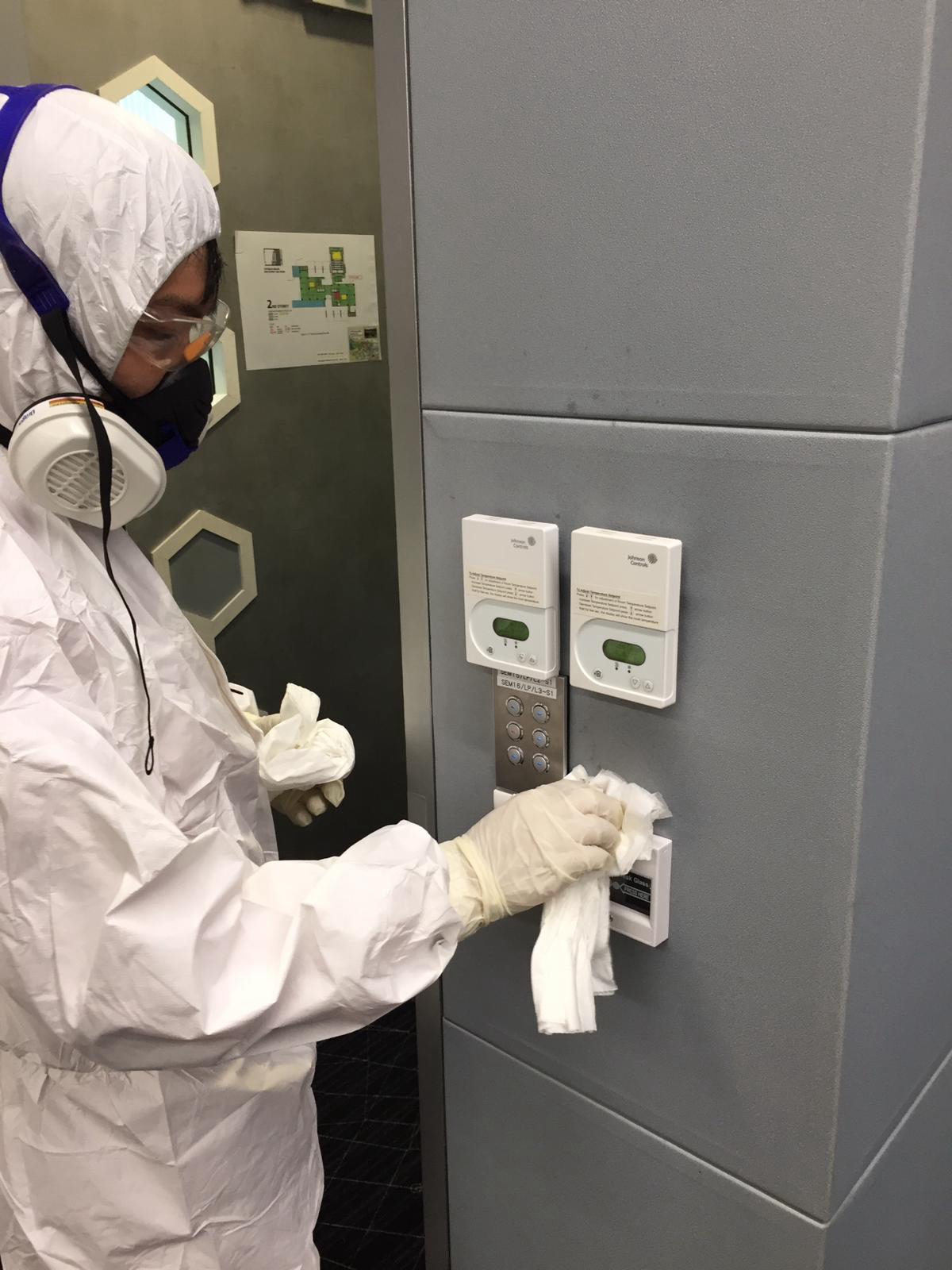
The keys arrive, the defects list is signed off, and the space looks clean. New paint, fresh fixtures, unmarked floors. But a newly completed or recently renovated commercial space in Singapore carries a contamination load that no visual inspection reveals, and that a standard builder's clean is simply not designed to remove.
Construction and fit-out work generates fine particulate dust that settles on every horizontal surface, into HVAC grilles, onto new joinery and into the fabric of upholstered furniture. That dust is not inert. In Singapore's humid climate, mould spores colonise settled construction dust within days. New fixtures and pipework begin forming biofilm the moment water contacts them. By the time a project manager walks the handover checklist, the contamination is already present, invisible, and waiting for your first occupants.
This is the gap between a builder's handover and a space that is genuinely ready for people.
Why this matters: The contamination left behind by construction is not cosmetic, it is biological, and it begins establishing itself before the first occupant arrives.
Highlights
- Construction dust is colonised by mould spores and fungal allergens within days in Singapore's humidity
- A standard builder's clean removes visible debris but does not disinfect surfaces or address biofilm formation on new fixtures
- HVAC grilles, ceiling tiles and soft furnishings trap fine particulate that routine cleaning does not reach
- AEGIS Microbe Shield coating bonds to surfaces and ruptures bacteria, mould and fungus on contact, giving residual protection between cleans for the life of the treated surface
- Treatments are field-verifiable by BPB test and approved under Health Canada PCP# 15133, US EPA reg. 64881-1 & 64881-7, EU PT-7 & PT-9 (REACH) and UK PT-2
What a builder's clean actually does (and does not do)
A builder's clean is a cleaning specification, not a disinfection standard. Its purpose is to remove construction debris: dust sheets, off-cuts, paint splatter, adhesive residue, and the coarser particulate that accumulates during fit-out. For most contractors, it ends when the space looks presentable to the client.
What it does not do:
- Disinfect surfaces or reduce bioburden on new fixtures
- Address fine respirable dust that has settled into air-handling grilles, ceiling voids and soft furnishings
- Prevent mould establishment on surfaces where construction dust has already settled in humid conditions
- Treat the internal surfaces of ductwork, which accumulate fine particulate during the entire construction period
- Apply any residual antimicrobial protection to high-touch surfaces before occupancy begins
The distinction matters commercially. When a facilities team signs a handover certificate, they are accepting the space as built. Any contamination that surfaces after occupancy, including mould on newly plastered walls or persistent dust-related complaints from staff, becomes the occupier's problem to manage and pay for.
The specific contamination signature of a new or renovated space
Fine particulate and mould colonisation
Construction generates a spectrum of particulate sizes. The coarser material is visible and is removed in the builder's clean. The fine fraction, below about 10 microns, remains airborne for hours and then settles invisibly on every surface in the space, including surfaces that were wiped down during the final clean.
In Singapore's year-round humidity, this settled dust provides an ideal substrate for mould spores. Mould does not need a leak or obvious dampness to establish; it needs organic matter, moisture in the air and a surface to colonise. Construction dust provides all three. Post-construction disinfection in Singapore is not a precaution against a hypothetical risk, it addresses a biological process that is already under way by handover day.
Biofilm on new fixtures
New plumbing fittings, tap bodies, drainage channels and wet-area surfaces begin forming biofilm the moment they contact water during the testing and commissioning phase. Biofilm is a structured community of microorganisms encased in a self-produced matrix. Once established on a surface, it is significantly harder to remove than planktonic bacteria, and routine cleaning with a cloth or a general-purpose spray rarely disrupts it fully. The disinfection service we apply to these surfaces reaches biofilm that a wipe-down cannot.
HVAC grilles and air-handling systems
Ductwork and air-handling components accumulate fine construction particulate throughout the build and fit-out period. Even after the system is commissioned and running, grilles and supply diffusers carry settled debris. When the air-conditioning operates, that particulate is distributed throughout the occupied space. The mechanical and electrical components of a building, including the full air-handling system in any Singapore commercial handover, are among the surfaces most likely to carry contamination that no visual inspection captures.
High-touch surfaces before first use
Door hardware, light switches, lift buttons and shared surfaces in breakout spaces accumulate handling contamination during the construction phase from multiple trades. These are the same surfaces that will become the primary cross-contamination pathway once the space is occupied. Treating them before first occupancy, rather than after the first reported contamination event, is the logical sequence.
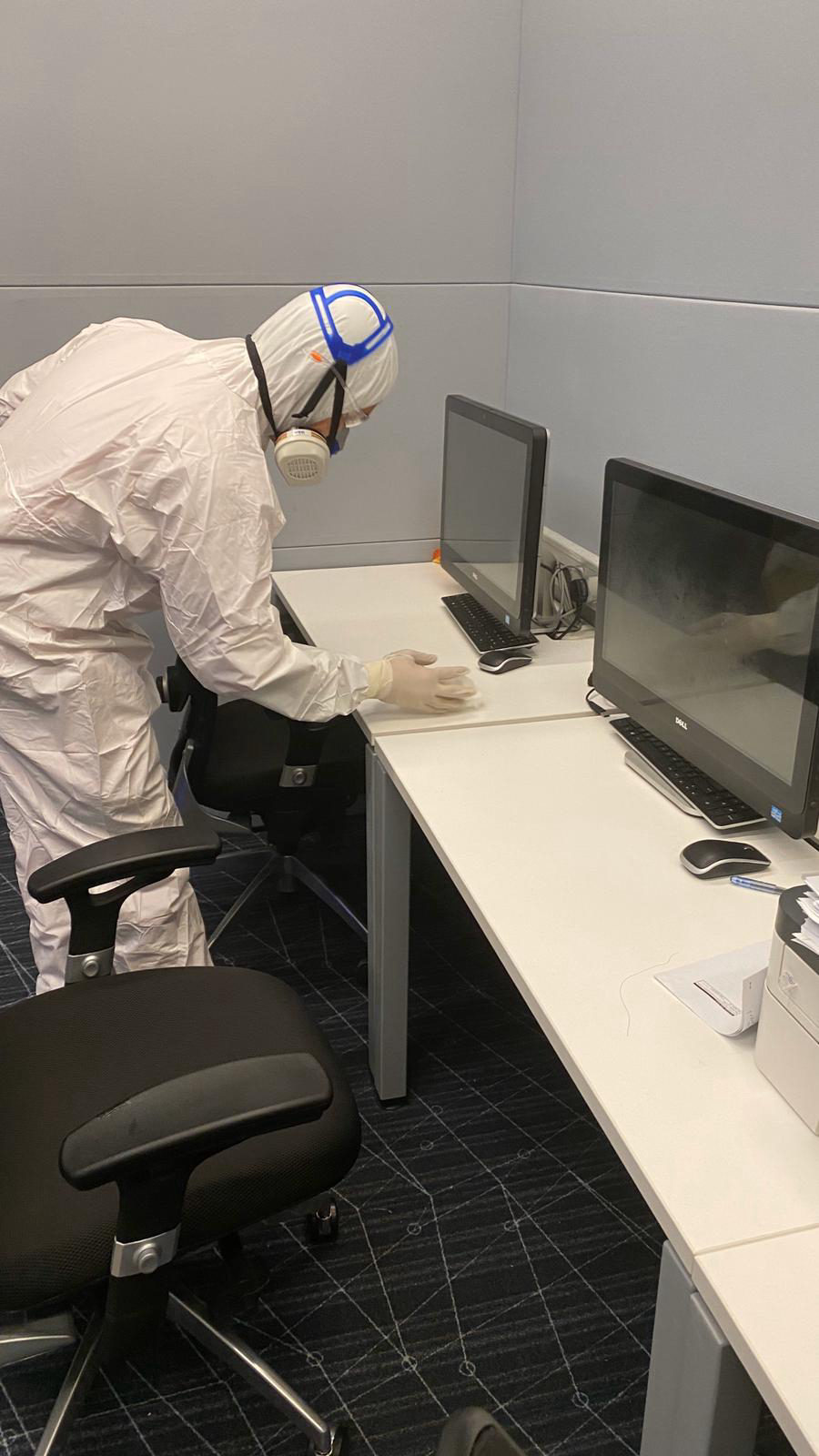
What post-construction disinfection actually involves
A proper post-construction disinfection and surface protection programme before Singapore handover sign-off involves more than a single fogging pass. The sequence that makes the difference:
|
Stage |
What happens |
Why it matters |
|---|---|---|
|
Assessment |
Identify high-risk surfaces: HVAC grilles, wet areas, soft furnishings, high-touch points |
Focuses treatment where bioburden is highest |
|
Disinfection |
Reduce the live microbial load on all treated surfaces |
Establishes a clean baseline before the coating is applied |
|
AEGIS Microbe Shield coating |
Silane quaternary-ammonium micropolymer bonds to the surface, forms a positively-charged layer that ruptures cell membranes on contact |
Provides residual, non-leaching protection between cleans for the life of the treated surface |
|
Field verification |
BPB test confirms the coating has bonded correctly |
Gives the facilities team documented proof before sign-off |
The coating works on plastic, wood, metal, glass and textiles, covering the full material range of a commercial interior. It is non-leaching, so it does not dissipate, transfer or get used up between cleans. A surface treated at handover continues to inhibit bacteria, mould and fungi on contact for the life of the treated material.
This is what separates a surface protection programme from a one-off fogging: the fogging reduces bioburden on the day. The coating keeps working between every subsequent clean.
When to call us and when a builder's clean is enough
For a straightforward residential handover with no immunocompromised occupants and no history of water ingress during the build, a good builder's clean may be sufficient. The risk profile is lower and the consequences of residual contamination are more manageable.
For a commercial or institutional handover, a clinic, a school, an office taking on a large staff headcount, a food-premises fit-out, or any space with shared high-touch surfaces and HVAC, a builder's clean is not enough on its own. The combination of Singapore's humidity, the biological processes already active at handover, and the density of people using the space from day one makes post-construction disinfection and surface protection the responsible pre-occupancy step.
If there is visible mould on new plasterwork, or evidence of water ingress during the build, remediation comes first. A coating applied over active mould does not solve the underlying problem. The mould source must be identified and treated before any surface protection programme makes sense. Our mould and bacteria remediation service addresses that step.
For a full picture of how our AEGIS treatment works from assessment through to field verification, the process is straightforward and can be scheduled around your handover timeline.
Some project managers also find it useful to see how other commercial operators have used AEGIS Microbe Shield in similar high-traffic settings before committing to a programme.
Frequently asked questions
Does post-construction disinfection need to happen before or after the defects inspection?
After is the practical answer for most projects. Defects inspections often involve trades returning to the space, which reintroduces particulate and handling contamination. Schedule disinfection and coating after the defects list is closed and before occupancy begins. That sequence gives the treated surfaces the best chance of staying protected from day one.
Will the AEGIS Microbe Shield coating affect new surfaces, paint or joinery?
The coating is a micropolymer that bonds at the molecular level to the surface without altering its appearance or texture. It works on plastic, wood, metal, glass and textiles. For any specialist finish, our team assesses compatibility before application, and the BPB field test confirms the bond before we sign off the treatment.
How long does the protection last after handover?
The AEGIS Microbe Shield coating is non-leaching, meaning it does not dissipate, transfer or get used up with routine cleaning. It provides residual protection for the life of the treated surface. High-abrasion surfaces, such as door handles or lift buttons that are replaced, would need re-treatment, but the coating itself does not degrade with normal use or cleaning.
Is one fogging treatment sufficient for a new commercial space?
A fogging treatment alone reduces the live bioburden on the day of application. Once the disinfectant dries, the surface has no residual protection and is open to recontamination with the first person through the door. The combination of a thorough disinfection followed by AEGIS Microbe Shield coating is what provides ongoing protection between your regular cleaning programme.
What documentation do we receive after treatment?
We provide a field-verification record based on the BPB test, which confirms the antimicrobial coating has bonded correctly to the treated surfaces. This gives your facilities team and your incoming occupants documented evidence of the surface protection, which can be retained as part of the handover file.
A space that looks clean at handover and a space that is biologically ready for occupancy are two different things. The gap between them is where contamination establishes itself, and where post-construction surface treatment does its real work.
Ready to protect your space before occupancy begins?
Contact Aegis Asia to arrange a post-construction disinfection and surface protection programme timed to your handover. Request a quote, call us on 6241 9443, WhatsApp 9222 9222, or email info@aegisasia.com.
Get a free quote