
Bus seats, MRT grab poles and taxi headrests: why a one-off disinfection leaves shared transport surfaces exposed
A bus completes dozens of trips a day. An MRT carriage carries tens of thousands of commuters across a week. Between every scheduled clean, hundreds of hands grip the same poles, the same door buttons, the same overhead handles. No operator can pull a vehicle out of service after every trip for a full disinfection, and even if they could, the moment the next passenger boards, the surface is open to recontamination.
This is the gap that a one-off disinfection cannot close. It cleans what is there at that moment. It leaves nothing behind. The surface is protected for the duration of the treatment and nothing more.
For transport operators and fleet managers in Singapore, that gap is not a minor inconvenience. It is the entire problem.
Why this matters: High-touch surfaces on shared transport accumulate bioburden from hundreds of passengers between scheduled cleans, and a one-off disinfection offers no protection the moment service resumes.
Highlights
- Grab poles, seat armrests, headrests and door buttons are among the highest-contact surfaces in any built environment, shared continuously across an operating day
- A one-off disinfection or fogging leaves no residual protection: the surface is exposed again the moment service resumes
- The AEGIS Microbe Shield is a silane quaternary-ammonium micropolymer coating that bonds to the surface and mechanically ruptures bacteria, mould and fungus on contact
- Non-leaching, so it does not wash off, transfer or get used up, it keeps working between cleans for the life of the treated surface
- Effective on the plastics, metals, glass and textiles found throughout a transit fleet: poles, armrests, headrests, windows, seat fabric
- Field-verified by the BPB test; approved under Health Canada PCP# 15133, US EPA reg. 64881-1 & 64881-7, EU PT-7 & PT-9 (REACH) and UK PT-2
The contact-frequency problem on public transport
Most disinfection thinking is built around a room or a clinic: clean it, close it, reopen it. Transport does not work that way. A vehicle is a continuous-use environment. A grab pole on an MRT carriage is gripped by a different hand every few seconds during peak hours. A taxi headrest makes contact with a new passenger every twenty minutes across a twelve-hour shift. A bus seat armrest is touched by a fresh set of hands at every stop.
Contact frequency on these surfaces is unlike almost anything else in a built environment. Research published in Frontiers in Cellular and Infection Microbiology noted that high-touch surfaces on public transport and in healthcare settings, handrails, door plates, water fittings, are among the priority targets for antimicrobial surface protection precisely because of the density and continuity of contact.
A scheduled wipe or fog addresses what is on the surface at that moment. It does not address what accumulates in the hours between cleans. That window is where the problem lives.
Why fogging alone is not sufficient for a fleet
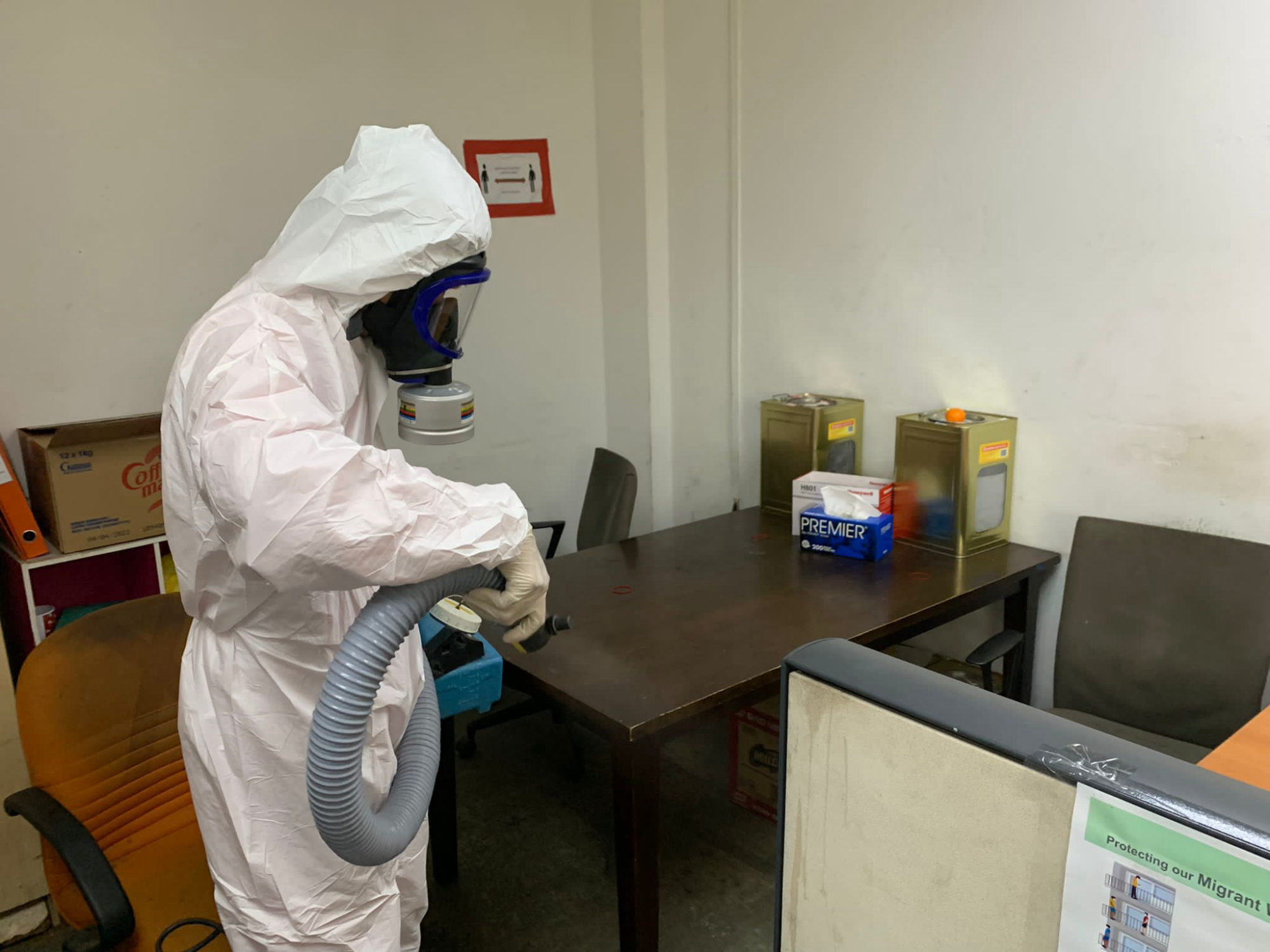
Fogging is a useful tool for decontaminating a space after a confirmed contamination event. Our bio-decontamination service is designed exactly for that. But a fog disperses, evaporates, and is gone. Once a treated surface is touched, wiped, or simply exposed to the next load of passengers, the protection is over.
For a fleet that cannot be taken out of service for repeated fogging after every trip, relying on one-off treatments means accepting that most operating hours are unprotected. That is not a cleaning problem. It is a structural gap in the protection model.
How an antimicrobial coating changes the model
The AEGIS Microbe Shield works differently from a disinfectant or a fogging agent. It is a silane quaternary-ammonium micropolymer that chemically bonds to the surface during application. Once cured, it forms a positively-charged coating. Bacteria, mould and fungus carry a negative charge: when they make contact with the treated surface, the coating ruptures their cell membranes mechanically.
Because the mechanism is physical rather than chemical, the coating does not dissipate between uses. It is non-leaching: it does not transfer to a passenger's hand, does not wash off with routine cleaning, and is not consumed by each contact. The surface keeps working between cleans, across operating hours and across the life of the treated surface.
For a transit fleet, this means that the gap between scheduled cleans, the window that a one-off disinfection leaves completely open, is now covered.
What surfaces in a transit fleet can be treated
The AEGIS Microbe Shield bonds to the range of materials found throughout a typical Singapore fleet:
- Metal: grab poles, overhead handles, handrails, door frames and push-plates
- Plastic: armrests, seat shells, door buttons, ticket validators, interior trim panels
- Glass: windows and partition screens
- Textiles: upholstered seat fabric and headrest covers
A single treatment covers the high-touch surfaces that matter most: the ones that accumulate the highest bioburden across an operating day, without requiring the vehicle to be removed from service for extended periods. Application is carried out by our technicians and the treated surface is ready for service once cured.
Field verification: knowing the coating is still there
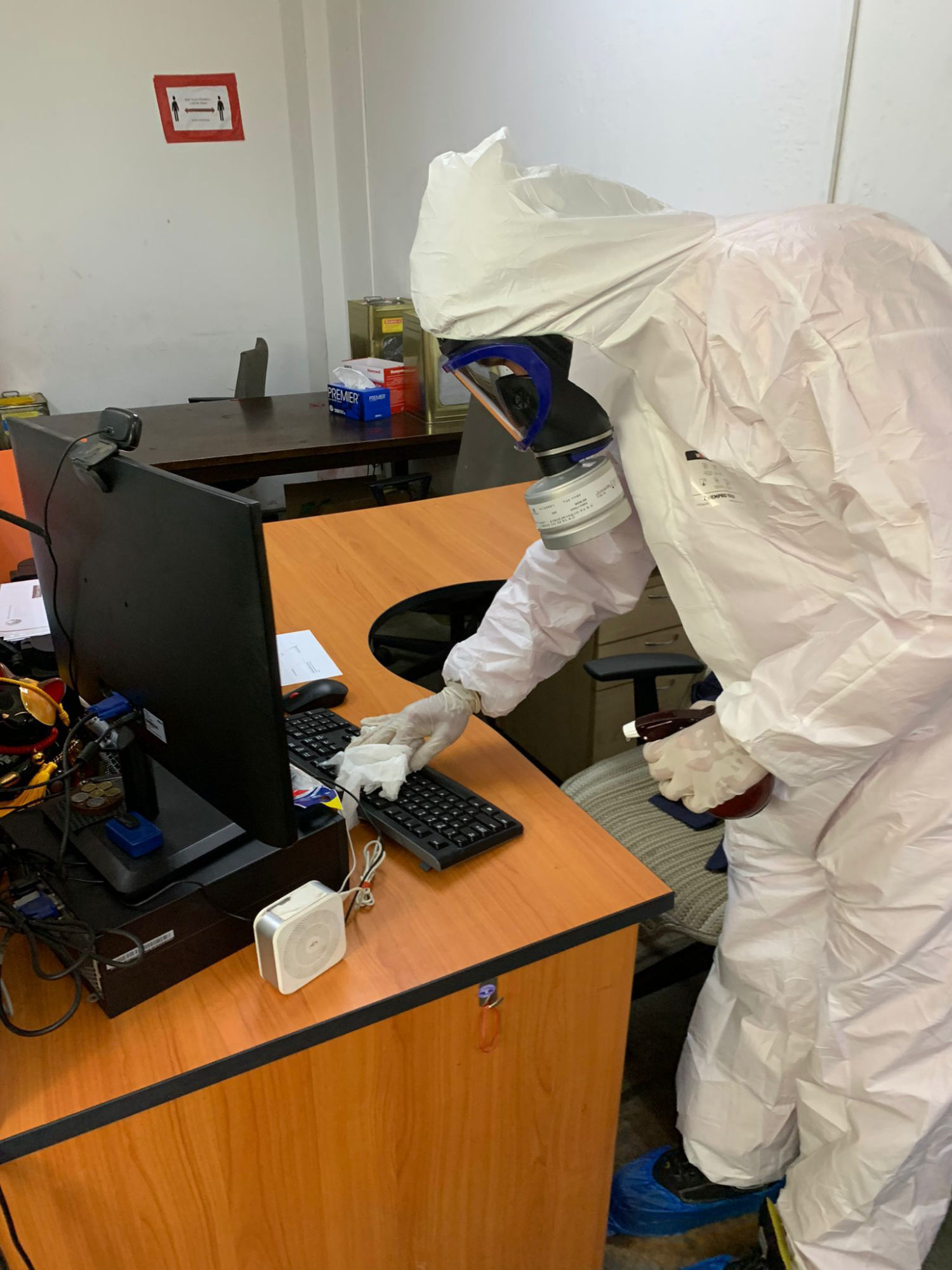
One practical question for a fleet operator is how to confirm a coating applied weeks or months ago is still performing. The AEGIS Microbe Shield can be field-verified using the bromophenol-blue test (BPB test): a simple colourimetric check that confirms the positive charge, and therefore the active coating, is present on the surface. This is not a laboratory assay. It can be carried out on-site, on the vehicle, without specialist equipment.
For operators managing a large fleet, BPB verification provides an auditable record that treated surfaces remain protected, which is useful for both internal compliance and for demonstrating due diligence to regulators or passengers.
When remediation or a deeper clean comes first
The AEGIS Microbe Shield is a coating, not a remediation. If a surface has an active contamination problem, visible mould, a confirmed outbreak, or a vehicle that has carried a passenger with a notifiable condition, that needs to be addressed before a coating is applied. Our bio-decontamination service handles confirmed contamination events; our mould and bacteria remediation service addresses active mould or biofilm on a surface. A coating applied over an unresolved contamination issue will not fix the underlying problem.
Once a surface is clean and dry, the coating bonds to it and takes over the between-clean protection. The right sequence is: remediate if needed, then coat, then verify.
For routine fleet maintenance with no active contamination, the coating can go straight onto clean surfaces without a remediation step. Most transport applications fall into this category.
Frequently asked questions
Will the coating wash off when we clean the vehicles between trips?
No. The AEGIS Microbe Shield bonds chemically to the surface during application and does not wash off with routine cleaning. It is non-leaching, which means it is not consumed by repeated wiping or contact. Routine cleaning between trips is not only compatible with the coating, it is recommended, because removing surface soiling helps the coating reach microbes on the surface directly.
Is the coating safe for passengers, including children?
Yes. Once cured, the coating is inert to contact: it does not transfer to skin, does not leach chemicals, and is not consumed by touch. The mechanism is physical, not chemical. The coating is approved under Health Canada PCP# 15133, US EPA reg. 64881-1 & 64881-7, EU PT-7 & PT-9 (REACH) and UK PT-2, across a range of regulatory frameworks that include consumer and occupational safety requirements.
How long does a treatment last on a high-use transit surface?
The coating is designed to protect for the life of the treated surface under normal use. High-contact surfaces on a transit fleet, poles, armrests, headrests, are subject to heavy wear. We can field-verify the coating's presence using the BPB test, which confirms the active charge is still there. For high-traffic applications, we recommend periodic verification checks as part of a managed programme, and re-treatment where needed.
Does every vehicle in a fleet need to be treated, or can we start with a subset?
You can start with the highest-use vehicles or the surface types that carry the most contact frequency, grab poles and armrests on busy routes, for example. A phased approach is practical and lets you verify results before extending treatment across the full fleet. We can help you assess which surfaces and vehicles carry the most risk and prioritise accordingly.
Can the coating be applied while vehicles are in service, or do they need to be taken out of the schedule?
Vehicles need to be available for the duration of the treatment and the curing period. Application time depends on the surface area being treated; for a typical bus or carriage interior focused on high-touch surfaces, this is manageable within a maintenance window. We work with fleet operators to schedule treatment around existing maintenance cycles to minimise disruption to service.
Protect your fleet between every clean
If you manage a transport fleet or a high-traffic vehicle operation in Singapore and want to close the gap that one-off disinfection leaves open, contact us to discuss a treatment programme.
- Call: 6241 9443
- WhatsApp: 9222 9222
- Email: [email protected]
Get a free quote