
When a confirmed outbreak forces you to act fast: what bio-decontamination actually involves
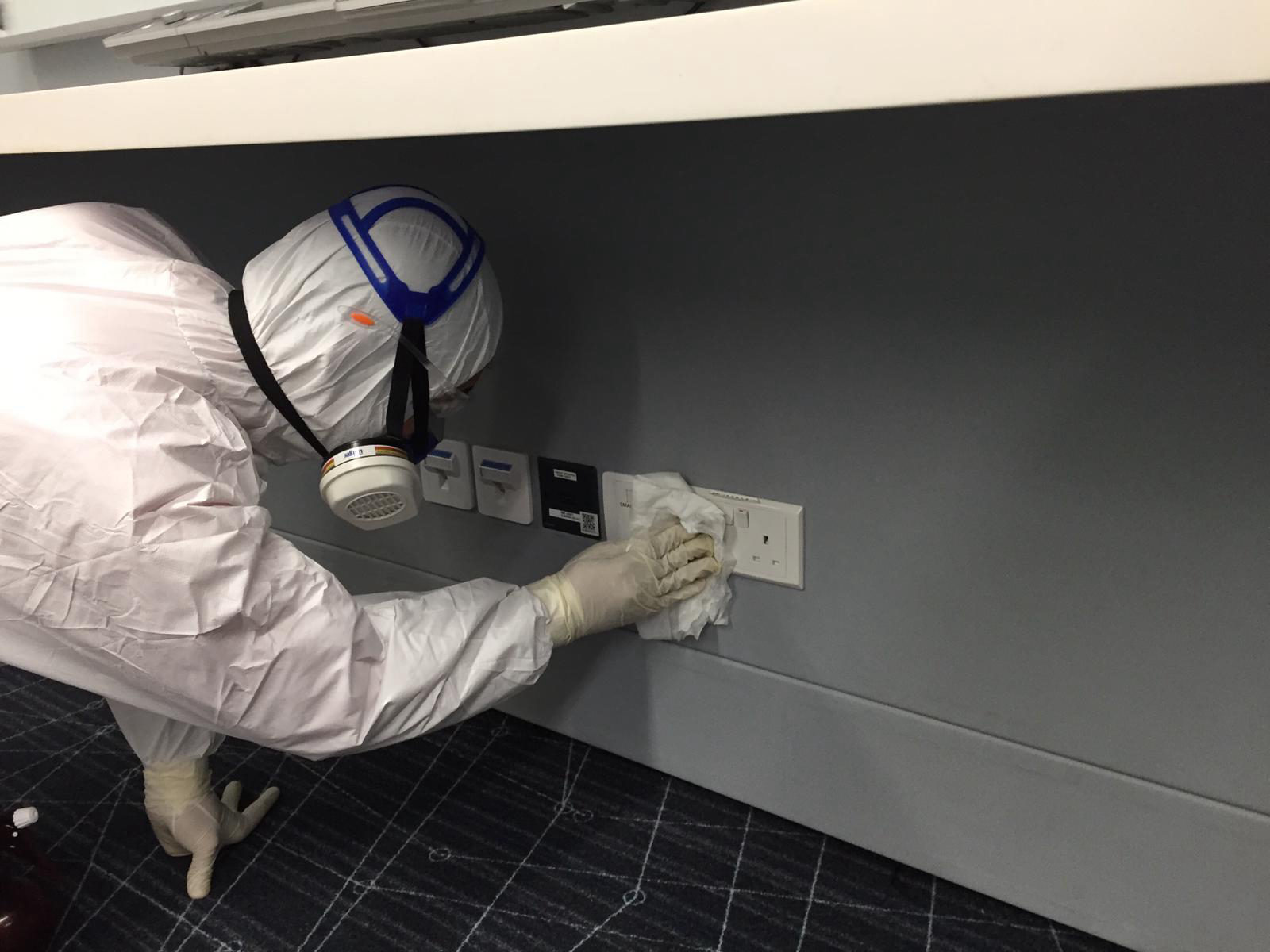
The call comes in, or the report lands on your desk, and suddenly you are managing an incident rather than a building. A cluster of staff illness, a confirmed Norovirus case in a shared pantry, a suspected food-borne contamination event in the kitchen, or an MRSA flag raised by a clinic's infection control officer. What follows matters enormously, and the next decision you make, whom to call and what to ask them to do, determines whether the space is genuinely safe to reopen or merely looks like it has been cleaned.
Most Singapore commercial and institutional premises have a routine cleaning schedule, and some have a periodic disinfection service. Neither is designed for outbreak response. An outbreak calls for something different: a structured, evidence-led bio-decontamination service that treats the space as a contaminated environment, not simply a dirty one.
The distinction sounds technical, but it is practical. Contamination from a pathogen like Norovirus or MRSA does not confine itself to the surfaces that look soiled. It spreads through contact, settles on high-touch surfaces, and, in some cases, persists for far longer than a standard cleaning cycle addresses.
Why this matters: After a confirmed outbreak, returning a space to use without a structured bio-decontamination process leaves residual contamination that routine cleaning will not reach, and that can drive a second wave of illness among staff, patients or guests.
Highlights
- Bio-decontamination after an outbreak is a structured process: containment, assessment, treatment, verification and return-to-use, not a one-off spray.
- Routine disinfection products and methods are not formulated or applied to handle an active contamination event; a specialist bio-decontamination service is.
- Aegis offers bio-decontamination for commercial and institutional premises across Singapore, including post-outbreak response.
- The AEGIS Microbe Shield, a silane quaternary-ammonium micropolymer coating, can be applied after remediation to give residual, non-leaching protection between cleans for the life of the treated surface.
- Field verification (BPB test) confirms that a treated surface carries the antimicrobial charge, giving you documented evidence of protection, not just a service record.
- Approvals: Health Canada PCP# 15133 · US EPA 64881-1 & 64881-7 · EU PT-7 & PT-9 · UK PT-2
What makes an outbreak different from a routine contamination event
A routine disinfection keeps a maintained, low-risk environment cleaner between scheduled cleans. That is a valid and important service. But it assumes the baseline contamination load is ordinary: the usual bioburden from daily foot traffic, touch contact and environmental exposure.
An outbreak breaks that assumption. The bioburden is elevated, the pathogen is identified (or suspected), and the contamination has likely spread beyond the visible source. Staff may have been moving through the space while symptomatic. Surfaces that were touched hours before anyone noticed the problem, lift buttons, door handles, shared equipment, food-prep counters, may all be contaminated.
The national infection prevention and control standards for nursing homes published by the Singapore Ministry of Health make the principle explicit: outbreak detection and control requires a defined response process, not simply an intensification of the cleaning schedule. The same logic applies to any high-traffic commercial or institutional space, whether a clinic, a school canteen or a corporate office.
Why a one-off disinfection spray is not enough
A fogging or spray-and-wipe disinfection service has a clear and legitimate role in infection control. What it cannot do is guarantee coverage of every contaminated surface in an uncontrolled environment, document which surfaces were treated and to what standard, or leave any residual protection once the disinfectant dissipates.
For an outbreak, that matters. If one surface is missed, or if re-entry and re-use of the space begins before the environment is verified clean, the contamination event continues.
The five stages of a credible bio-decontamination response
A structured bio-decontamination service for an outbreak moves through a defined sequence. Understanding each stage helps a facilities manager brief a specialist quickly, set realistic expectations for downtime, and know what to ask for when the job is done.
Stage 1: containment and site assessment
Before treatment begins, the affected zone needs to be defined. This means identifying the likely index area (where the illness originated or was first reported), mapping the surfaces and spaces that may have been contaminated by contact or air movement, and restricting access so the contamination boundary does not grow during the response.
A specialist will assess the surface types present, plastic, metal, glass, textiles, porous versus non-porous, because the right approach and dwell times depend on the substrate. They will also note HVAC configuration, since some pathogens can move through air-handling systems.
Stage 2: decontamination treatment
The treatment itself uses biocidal agents selected for the specific pathogen risk, applied with dwell times and methods appropriate to the surface load. This is not a quick fog-and-go. In a genuine outbreak response, coverage is methodical, surfaces that accumulate contamination (high-touch points, shared equipment, soft furnishings) receive prioritised attention, and any areas requiring remediation, visible soiling or biofilm, are addressed before the biocide is applied.
For healthcare, food-premises and institutional settings in Singapore, the national cleaning standards for acute healthcare facilities specify that high-risk areas require documented IPC (infection prevention and control) audit processes. The same rigour is good practice in any high-traffic premise managing an outbreak.
Stage 3: residual surface protection
Once the environment has been decontaminated, applying a non-leaching antimicrobial coating such as the AEGIS Microbe Shield gives the treated surfaces a layer of ongoing protection between future cleans. The coating bonds to the surface as a silane quaternary-ammonium micropolymer, forming a positively-charged layer that mechanically ruptures the cell membranes of bacteria, mould, fungus and their allergens on contact.
Critically, the coating does not dissipate, transfer or get used up. It is not a wet product that washes away when the surface is cleaned next. It works on plastic, wood, metal, glass and textiles, practically every contact surface in a commercial interior.
This is the step that distinguishes a post-outbreak treatment from a one-time event. A surface that has been decontaminated and then coated is not simply clean at the moment of treatment; it is actively hostile to microbial growth between cleans for the life of the treated surface.
Stage 4: field verification
Verification is the stage most facilities managers do not think to ask about, and the one that matters most when you need to demonstrate due diligence, to management, to a regulatory body, or to staff who are nervous about returning to work.
The AEGIS Microbe Shield coating can be verified in the field using the bromophenol-blue (BPB) test, which confirms that the treated surface carries the antimicrobial charge. This gives you a documented, repeatable result, not just a technician's word that the job was done.
For a post-outbreak scenario, that verification record is part of your incident documentation. It is the evidence that the space was treated to a defined standard, not merely that someone attended with a spray bottle.
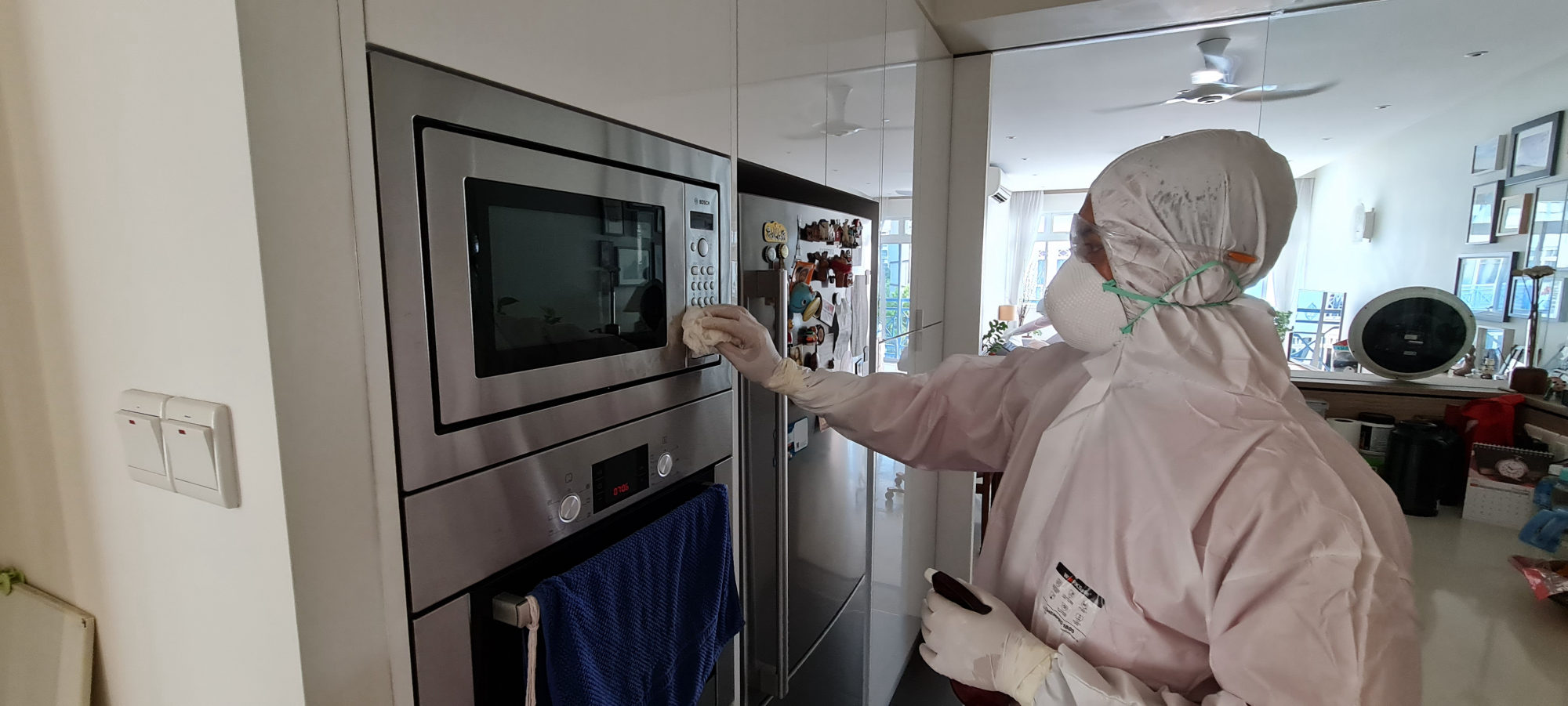
Stage 5: managed return-to-use
Return-to-use is not the moment the technicians leave. It is the point at which the space has been verified as meeting the decontamination standard and access controls can be lifted. A clear return-to-use protocol, who authorises re-entry, what documentation is issued, what the ongoing maintenance schedule looks like, is part of a complete bio-decontamination service.
For recurring-risk spaces (a clinic treatment room, a school canteen, a food-processing area), the return-to-use stage should also include a plan for ongoing protection. The AEGIS Microbe Shield coating service and after-care treatment are both designed to maintain that protection over time, not to treat the space as a one-off problem solved.
When to call a specialist and when you can manage it yourself
Not every contamination event requires a full bio-decontamination service. A single isolated incident on a small surface area, addressed quickly with appropriate biocides and proper PPE, may be manageable with your existing cleaning team, provided they are trained, the products are correct, and the area is well-defined.
Call a specialist when:
- The outbreak has affected multiple people or extended over more than one day
- The contamination source has not been identified and contained
- The premises involves a vulnerable population (patients, elderly residents, young children)
- The affected area includes food-preparation surfaces, medical equipment, or shared HVAC
- You need documented verification for regulatory, insurance or internal governance purposes
- A routine disinfection has already been carried out and illness has continued
A coating or a decontamination treatment cannot fix an active source of contamination. If there is a water leak driving mould, a drainage fault allowing sewage ingress, or a vector that has not been identified, that source must be resolved before or alongside the decontamination, not after. Treating the surfaces while the source remains active is treating the symptom.
For food premises and healthcare settings, Singapore's regulatory bodies (the Singapore Food Agency and the Ministry of Health) may also specify minimum response standards. A specialist service that documents its methods and outcomes gives you the paper trail to demonstrate compliance, not just a clean-looking space.
Related: see how high-touch surfaces in a clinic carry cross-contamination risk and how to protect them, the same principles apply to any shared commercial space managing an outbreak.
Frequently asked questions
How quickly can a bio-decontamination team be on-site after an outbreak is confirmed?
In most cases we can mobilise rapidly, contact us as soon as the incident is confirmed so we can assess scope and schedule. Turnaround depends on the size of the affected area, the surfaces involved, and whether remediation of visible contamination is needed before treatment. We will give you a realistic timeline at the assessment stage, not a blanket same-day promise.
Will staff need to vacate the premises during treatment?
Yes. The affected zone should be cleared during the decontamination treatment, and access should remain restricted until the return-to-use standard is met and verification is complete. For most commercial premises this means a defined window of downtime rather than a full-day closure, but the exact period depends on the size and complexity of the treated area.
Is the AEGIS Microbe Shield coating safe for use in food-preparation areas and clinics?
The AEGIS Microbe Shield coating is approved under Health Canada PCP# 15133, US EPA reg. 64881-1 & 64881-7, EU PT-7 & PT-9 (REACH) and UK PT-2, and is non-leaching, it does not transfer to food, skin or other surfaces. It works on plastic, metal, glass and other common food-contact and clinical substrate types. We describe what the coating does to surfaces and microbes; for specific regulatory requirements in your premises category, check with the relevant Singapore authority.
How is a bio-decontamination service different from a standard disinfection?
A standard disinfection service reduces the bioburden on a maintained surface. A bio-decontamination service treats a space as a contaminated environment: it involves site assessment, defined containment, methodical biocidal treatment, and documented verification. After an outbreak, the decontamination can be followed by a non-leaching antimicrobial coating that gives residual protection between future cleans, something a routine disinfection product does not provide.
What documentation do we receive after the treatment?
We provide a service record covering the areas treated, the products and methods used, and, where the AEGIS Microbe Shield coating is applied, the field-verification result from the BPB test. This gives you documented evidence of the decontamination standard for your incident file, your management, or any regulatory inquiry.
An outbreak is a serious event, but a structured bio-decontamination response, one that moves methodically from containment through verified treatment to a documented return-to-use, gives you something better than a clean-looking space: it gives you evidence that the space is genuinely protected, and a surface coating that keeps working long after the technicians have left.
Get a free quote