
HVAC duct cleaning and disinfection: why a clean duct still spreads contamination if the surfaces aren't treated
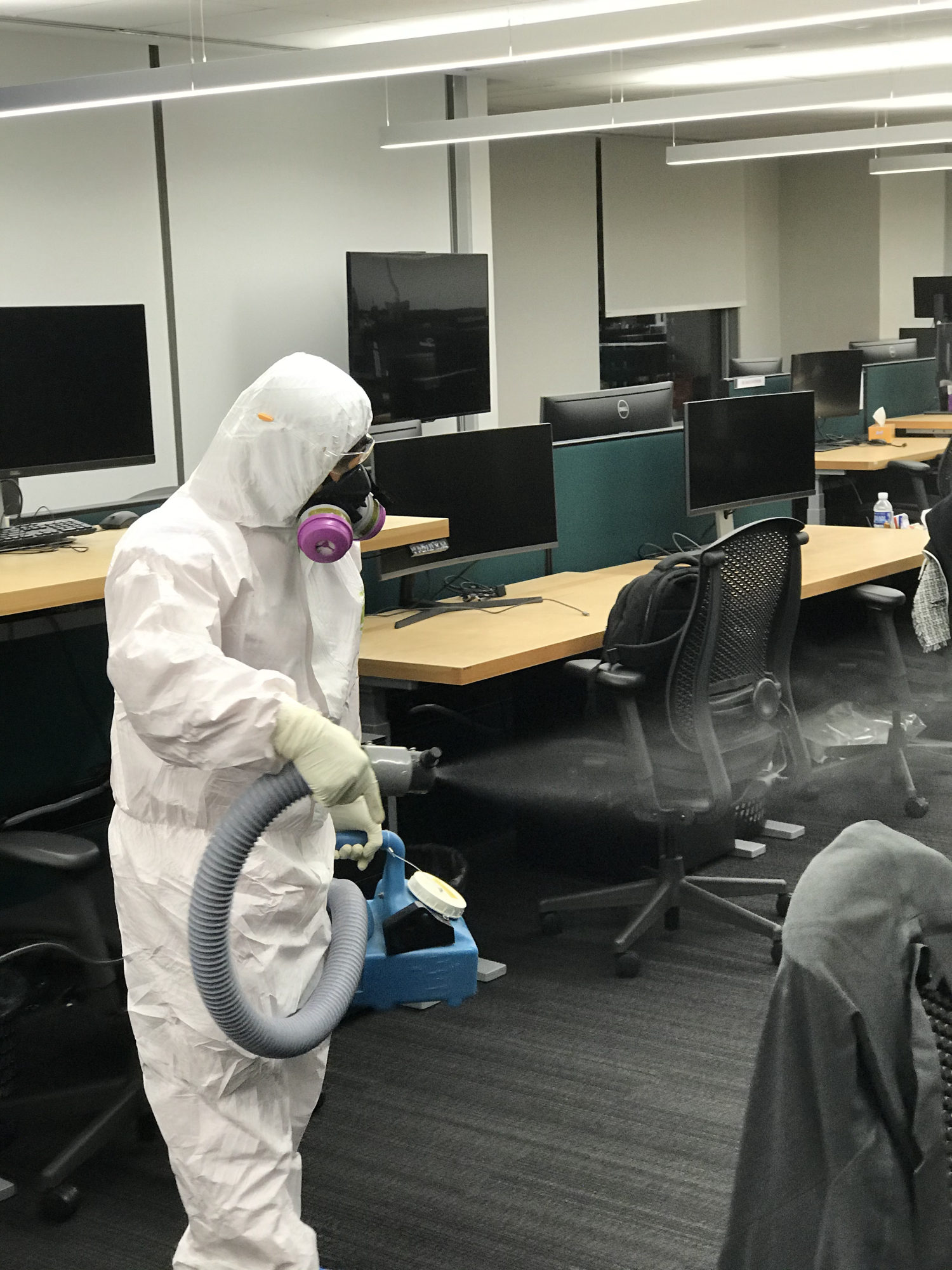
Most facilities managers who call us after a duct clean are puzzled. The contractor came, vacuumed out the debris, issued a report, and within a few weeks the musty smell was back, the air quality complaints resumed, and in some cases visible mould had reappeared at the supply diffusers. The duct was clean. So why did the problem come back?
The short answer: cleaning removes loose debris and surface contamination. It does not remove the biofilm that coats duct walls, and it leaves the surface open to recolonisation the moment conditioned air starts moving through again. In a humid Singapore building running air conditioning year-round, that recolonisation can happen faster than most people expect.
This gap between a clean duct and a protected duct is exactly what HVAC duct disinfection in Singapore needs to address, and it is what separates a one-off clean from a managed surface-hygiene programme.
Why this matters: A duct that looks clean after mechanical cleaning still carries biofilm and mould spores on its inner surfaces, which recolonise quickly in Singapore's humid conditions and distribute contamination through every room the system serves.
Highlights
- Mechanical duct cleaning removes debris but leaves biofilm, mould spores and bacterial residue on duct surfaces
- Biofilm is the reservoir: it protects microbial colonies from air movement and most disinfectant sprays
- Singapore's humidity and continuous air conditioning create near-ideal conditions for rapid recolonisation
- The AEGIS Microbe Shield is a silane quaternary-ammonium micropolymer coating applied after cleaning; it bonds to duct surfaces and mechanically ruptures bacteria, mould and fungus on contact
- Non-leaching and residual: it does not wash off, does not get used up, and keeps working between maintenance visits for the life of the treated surface
- Field-verifiable by BPB test; approved under Health Canada PCP# 15133, US EPA reg. 64881-1 & 64881-7, EU PT-7 & PT-9 (REACH) and UK PT-2
What cleaning actually does, and does not do
The debris versus the biofilm
A standard HVAC duct clean typically involves mechanical agitation (brushing or compressed air), vacuum extraction of loosened debris, and sometimes a one-off disinfectant fog or spray. That process is genuinely useful: it removes accumulated dust, fibres, insect debris and loose mould growth that reduce airflow and act as a nutrient base for microbial growth.
What it cannot reliably remove is biofilm: the structured layer of microbial colonies that adheres directly to the duct wall surface. Biofilm is not loose debris. It is a community of bacteria, mould and fungus embedded in a self-produced matrix, physically bonded to the metal, fibreglass or flex-duct surface. Brushing disturbs the top layer; the base layer remains, and it regrows.
Why the surface is immediately vulnerable after cleaning
A freshly cleaned duct surface is, in a sense, more exposed than before. The debris that was sitting on it has been removed, but so has anything that was providing even marginal competition for new microbial colonies. The moment conditioned air, carrying humidity, organic particulates and airborne spores, moves through the duct again, the recolonisation clock starts.
In Singapore, where buildings run air conditioning continuously and ambient humidity is consistently high, that clock runs fast. The treated duct surface needs something that keeps working between cleans, not just in the hour after the contractor leaves.
How HVAC systems distribute what grows inside them
Air conditioning ducts are, by design, a distribution network. Whatever is in the duct, including whatever is growing on the duct surfaces, gets carried to every room the system serves. Research published in the *International Journal of Environmental Research and Public Health* noted that coronavirus could disperse around buildings via air conditioning systems or through draught ducts, with traces found in hospital air duct systems. The same principle applies to mould spores and bacterial contamination: the HVAC system is a highly efficient delivery mechanism.
For a clinic, a school, a hotel, or a food-premises operator, that means bioburden growing on duct surfaces does not stay in the duct. It circulates. A bio-decontamination that addresses the duct surfaces, not just the air passing through them, is the step that actually interrupts that cycle.
Biofilm and mould: the two main surface threats
In practice, the two contamination types we see most often on duct surfaces in Singapore commercial buildings are:
- Biofilm: a mixed community of bacteria and sometimes fungal elements, forming a layered structure bonded to the metal or lined surface. Biofilm is resistant to air movement and to many liquid disinfectants because the matrix protects the cells beneath the surface layer.
- Mould colonies: typically Cladosporium, Aspergillus or Penicillium species in Singapore's climate, growing where condensation collects: around coils, at bends, near supply diffusers. A cleaning removes visible growth but leaves spores on the surface and on the duct wall itself.
For buildings with persistent mould, the duct is often only part of the picture. If there is a moisture source, such as a poorly insulated duct section, a condensate drain that backs up, or water ingress at a penetration, no surface treatment holds until that source is fixed. We say this plainly: a coating protects the surface it is applied to; it cannot fix an active water problem. That has to come first.
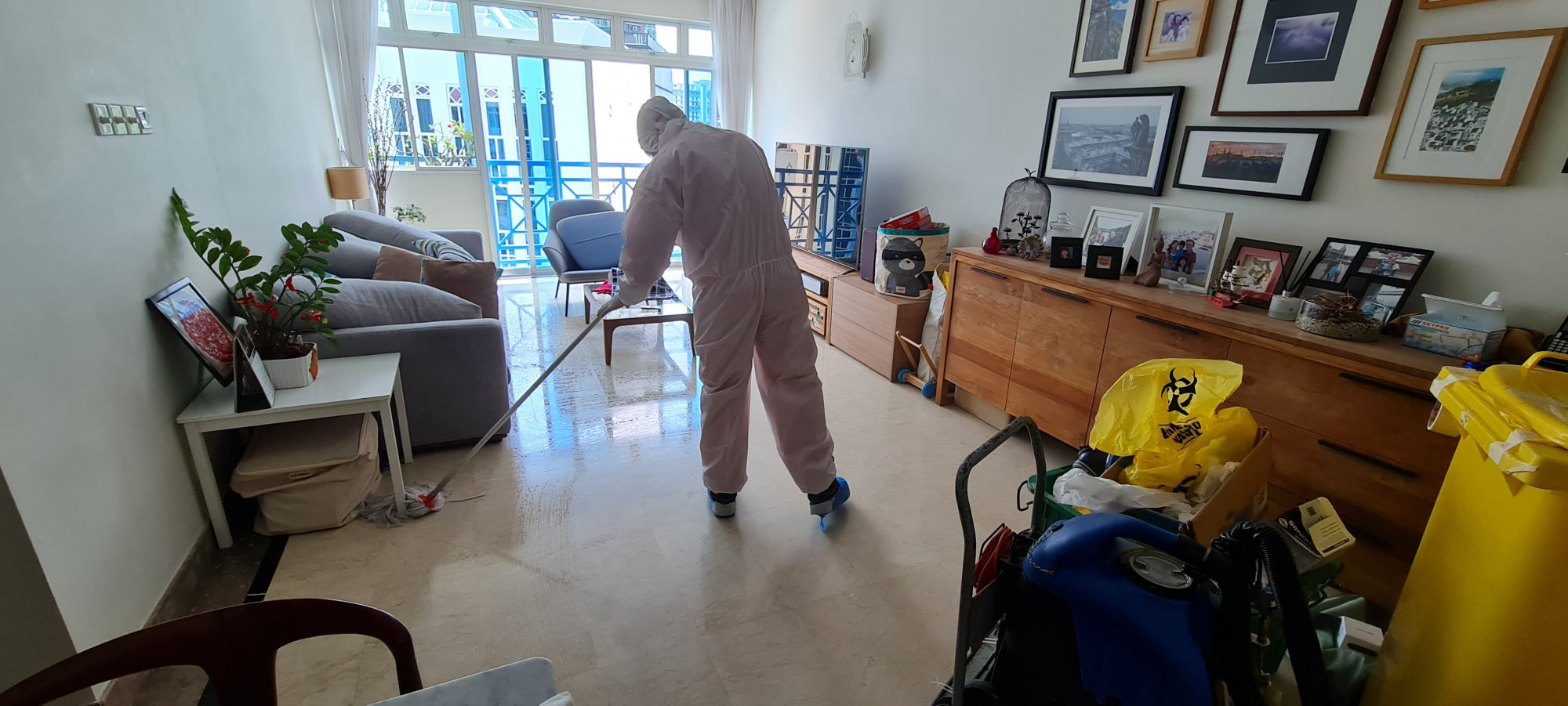
The case for a residual antimicrobial coating on duct surfaces
What the AEGIS Microbe Shield does differently
The AEGIS Microbe Shield coating is a silane quaternary-ammonium micropolymer. Applied to a duct surface after the mechanical clean and any necessary remediation, it bonds covalently to the surface material, whether metal, fibreglass lining or flex-duct, and forms a positively charged coating. That charge mechanically ruptures the cell membranes of bacteria, mould and fungus on contact. There is no leaching of active chemicals, no dissipation, no transfer to the airstream.
Because the coating is non-leaching, it is not consumed by each contact event. It keeps working between maintenance visits, for the life of the treated surface, without needing to be reapplied after each clean. That residual protection is the meaningful difference between a treated duct and an untreated one: a cleaning event resets the loose debris; the coating holds the surface between cleans.
When remediation comes before coating
For ducts with active mould growth, visible colonies, persistent musty odour at diffusers, or confirmed surface contamination, the sequence matters. Our mould and bacteria remediation addresses the active growth first, treating the source rather than coating over it. Only once the surface is clean and the moisture source is controlled does applying the AEGIS Microbe Shield make sense. Coating over active mould does not fix mould.
For ducts that have had a recent professional clean with no active contamination, the coating can follow the clean directly.
Verification
One question we get from facilities managers is: how do I know the treatment is actually on the surface? The AEGIS Microbe Shield can be field-verified using the bromophenol-blue (BPB) test, which gives a visible colour result confirming the treated surface carries the expected charge. That is a practical answer to a fair question, and it is something a one-off disinfectant fog cannot offer.
When you can manage it yourself, and when to call a professional
For routine HVAC maintenance, changing filters on schedule, keeping condensate drains clear, and arranging a periodic mechanical duct clean from a qualified contractor are all tasks a facilities team can and should manage. These reduce the nutrient load in the system and slow recolonisation.
A professional treatment is the right step when:
- Musty odours return within weeks of a duct clean
- Visible mould appears at supply diffusers or on duct surfaces
- Air quality complaints persist despite regular maintenance
- The building has had a confirmed contamination event or an outbreak response requirement
- The facilities team wants verifiable, residual protection between maintenance cycles rather than a clean that starts degrading the moment air flows again
For those situations, a surface treatment applied by a trained technician, not a DIY fogging product sprayed into the diffuser, is what holds. The AEGIS Microbe Shield application process involves surface preparation, proper application technique, and field verification, not just a spray and a report.
For any building that has already had a confirmed pathogen event, our bio-decontamination service covers both the immediate decontamination and the residual surface treatment. You can read more about that in what bio-decontamination actually involves when an outbreak forces you to act.
Frequently asked questions
Does the coating go into the airstream and affect air quality?
No. The AEGIS Microbe Shield is a non-leaching coating: once bonded to the duct surface, it does not release into the air, does not transfer to the airstream, and does not dissipate. It stays on the surface where it was applied. That is precisely the property that makes it suitable for HVAC duct surfaces.
How soon after a duct clean can the coating be applied?
Typically the coating can be applied immediately after the mechanical clean, provided the duct surfaces are dry and free of active mould growth. If remediation is needed first, for example where visible mould colonies are present, that comes before the coating. We assess the duct condition before confirming the right sequence.
How long does the residual protection last?
The AEGIS Microbe Shield is designed to last for the life of the treated surface under normal conditions. It is not consumed by contact events and does not wash off with routine cleaning. Protection is maintained between standard maintenance cycles, and the treated surface can be re-verified with a BPB test at any point.
Will this work on different duct types, metal, flex-duct, fibreglass-lined?
Yes. The AEGIS Microbe Shield bonds to plastic, metal, glass, wood and textiles, which covers the main duct surface types used in Singapore commercial buildings: galvanised steel, aluminium, fibreglass board and flexible duct with a foil or fabric liner.
Is HVAC duct disinfection in Singapore regulated or required?
Singapore's NEA sets indoor air quality guidelines for air-conditioned buildings, and building owners have a general duty to maintain ventilation systems. There is no single mandatory schedule for duct disinfection, but for healthcare premises, food establishments and schools, maintaining demonstrably clean and protected HVAC surfaces is a clear operational responsibility, and one that a verifiable residual coating directly supports.
A clean duct is a good start. A treated duct is what keeps the contamination from coming back.
Ready to protect your duct surfaces between cleans? Contact us to discuss your building's requirements or request a quote online. You can also call us on 6241 9443, WhatsApp 9222 9222, or email info@aegisasia.com.
Get a free quote