
What a log reduction actually means for your treated surfaces: reading antimicrobial efficacy claims honestly
You are reviewing proposals for surface protection and every supplier quotes a kill-rate percentage. One says 99.9%. Another says 99.999%. A third just says 'proven efficacy' without a figure at all. The numbers look similar until you understand logarithmic scale, at which point the differences become stark.
For a facilities manager or clinic operator, this is not an academic question. The gap between a 3-log reduction and a 5-log reduction is not 2%; it is the difference between 1,000 surviving organisms per million and 10. On a high-touch clinical surface, that matters.
Understanding what these figures actually measure, and what they do not, is the first step to making a genuinely informed decision about surface protection.
Why this matters: A single percentage figure on a product data sheet tells you almost nothing unless you know the log scale behind it, the surface conditions it was tested under, and whether the protection is residual or one-off.
Highlights
- A 3-log reduction means 99.9% of microbes removed; a 5-log reduction means 99.999%, that is 100 times fewer survivors.
- Test conditions (surface type, contact time, bioburden, humidity) determine whether a lab result translates to your premises.
- A non-leaching antimicrobial coating provides residual protection between cleans; a one-off disinfectant does not.
- The AEGIS Microbe Shield is a silane quaternary-ammonium micropolymer that mechanically ruptures microbes on contact and keeps working for the life of the treated surface.
- Treatments can be field-verified on your actual surfaces using the bromophenol-blue (BPB) test.
What a log reduction actually measures
The logarithmic scale, in plain terms
A log reduction is a base-10 measure of how much a treatment reduces a microbial population on a surface. Each additional log represents a tenfold reduction in surviving organisms.
|
Log reduction |
Percentage killed |
Survivors per 1,000,000 organisms |
|---|---|---|
|
1-log |
90% |
100,000 |
|
2-log |
99% |
10,000 |
|
3-log |
99.9% |
1,000 |
|
4-log |
99.99% |
100 |
|
5-log |
99.999% |
10 |
|
6-log |
99.9999% |
1 |
When a product claims "99.9% efficacy", that is a 3-log result. It sounds high. But if the starting bioburden on a frequently touched surface is one million organisms, you still have a thousand survivors after treatment. On a clinic reception desk or a ward door handle, those thousand surviving organisms are not a trivial residue.
Why the starting bioburden changes everything
The number of survivors depends on both the log reduction and the starting count. A 3-log reduction applied to a surface with 10,000 organisms leaves 10. The same 3-log reduction applied to a surface with 10,000,000 organisms leaves 10,000. This is why surface condition before treatment matters as much as the product's rated efficacy, and why a genuinely protected surface needs both preparation and a residual mechanism.
How test conditions affect real-world outcomes
The gap between a laboratory coupon and your premises
Most efficacy figures are generated under controlled laboratory conditions: a clean, smooth coupon of a single material, inoculated with a known concentration of a specific organism, tested at a fixed temperature and humidity. Research published in PMC on transparent antimicrobial surface coatings confirms that kill rates are typically measured under these standardised conditions, with results that "may differ from real-world performance depending on surface geometry, contamination level and environmental variables."
Your premises are not a laboratory coupon. A clinic corridor wall is painted concrete with microscopic pores. A lift button is a rough metal alloy touched by hundreds of hands. A food-prep counter is stainless steel that has been scored by years of cleaning. Each surface holds biofilm, organic load and irregularities that a lab coupon does not.
This does not mean efficacy data is useless. It means you need to read it critically: what surface was tested, what organism, at what contact time, and under what humidity? A 5-log result on a polished steel coupon at 22°C does not automatically translate to a 5-log result on a textured plastic panel at Singapore's ambient 30°C and 85% relative humidity.
Contact time and residual protection
Many disinfectant claims specify a dwell time, often 30 seconds to 10 minutes. The product achieves its rated log reduction only if it stays wet on the surface for the full contact time. On a vertical surface in an air-conditioned room, that is rarely guaranteed. Once the product dries, the protection stops.
This is the fundamental difference between a standard disinfectant and a residual antimicrobial coating. A coating that bonds to the surface keeps working between cleans. It does not rely on staying wet, and it is not used up on contact.
What makes an antimicrobial coating different from a one-off disinfectant
The mechanism: rupture versus poison
Conventional disinfectants work by a chemical reaction: the active ingredient poisons or oxidises the organism. Once the chemical is consumed, neutralised or evaporated, the protection ends. Organisms that survive, or organisms that arrive after the treatment dries, find an unprotected surface.
The AEGIS Microbe Shield works differently. It is a silane quaternary-ammonium micropolymer. When applied, the silane component bonds covalently to the surface, and the quaternary-ammonium chains extend outward, forming a positively-charged coating. Bacterial cell membranes carry a negative charge, so they are drawn to the surface and the coating mechanically ruptures the cell membrane on contact. No poison, no leaching active ingredient, no build-up of resistance. The mechanism is physical, not chemical.
Because it is non-leaching, the coating does not dissipate, transfer or get used up. It keeps working for the life of the treated surface, protecting between cleans rather than only in the moments just after a clean.
Which surfaces it works on
The coating bonds to plastic, wood, metal, glass and textiles, which means it is practical across the full range of high-touch surfaces in a clinic, office or food-premises environment: door handles, handrails, desk surfaces, lift buttons, chair arms, soft furnishings and curtain fabric. For a broader picture of how the AEGIS treatment is applied across different surfaces and settings, the process page walks through the stages.
When a coating is and is not the right first step
An antimicrobial coating protects the surface it is applied to. It does not fix an active contamination problem, and it cannot substitute for remediation when one is needed.
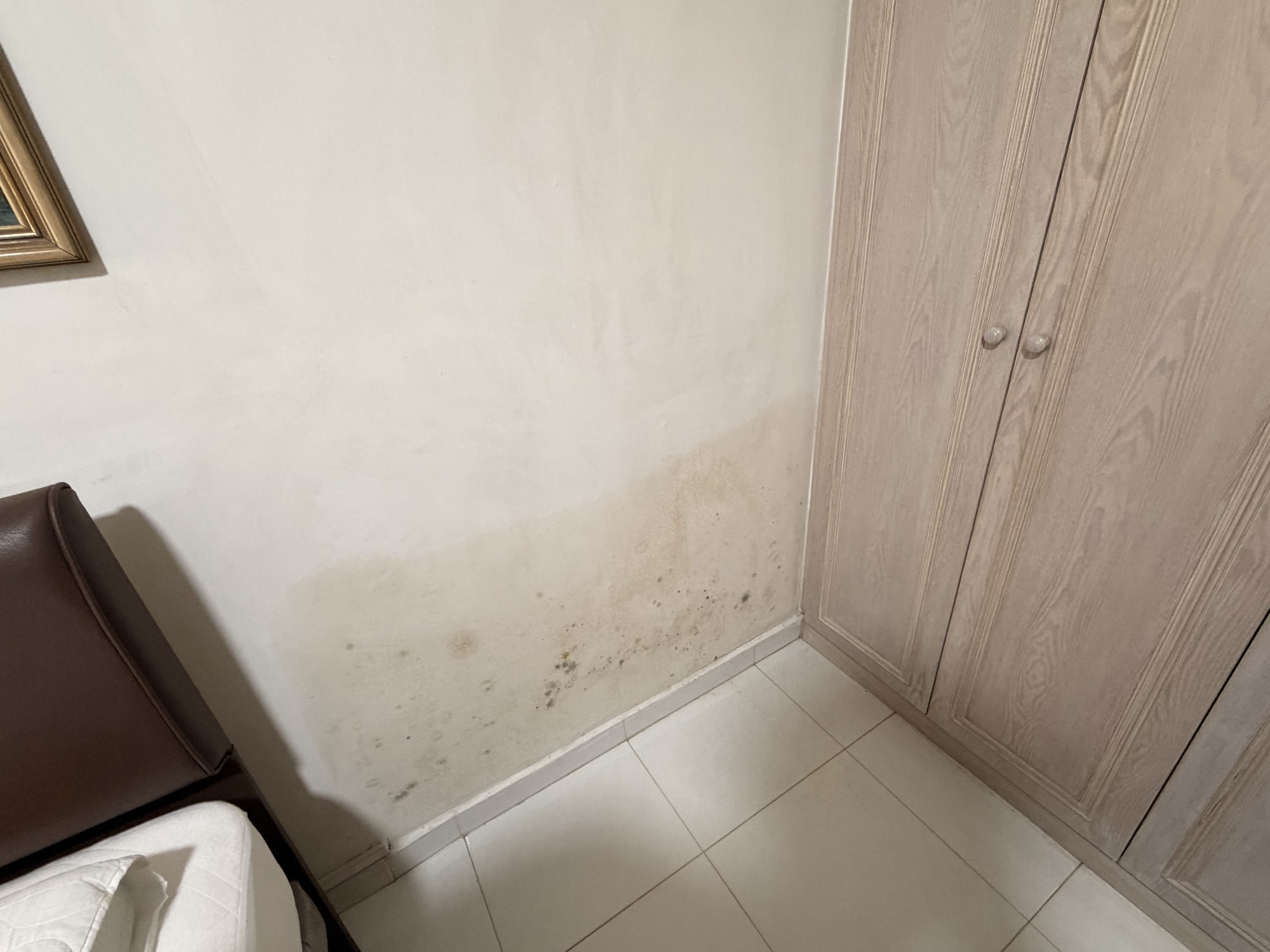
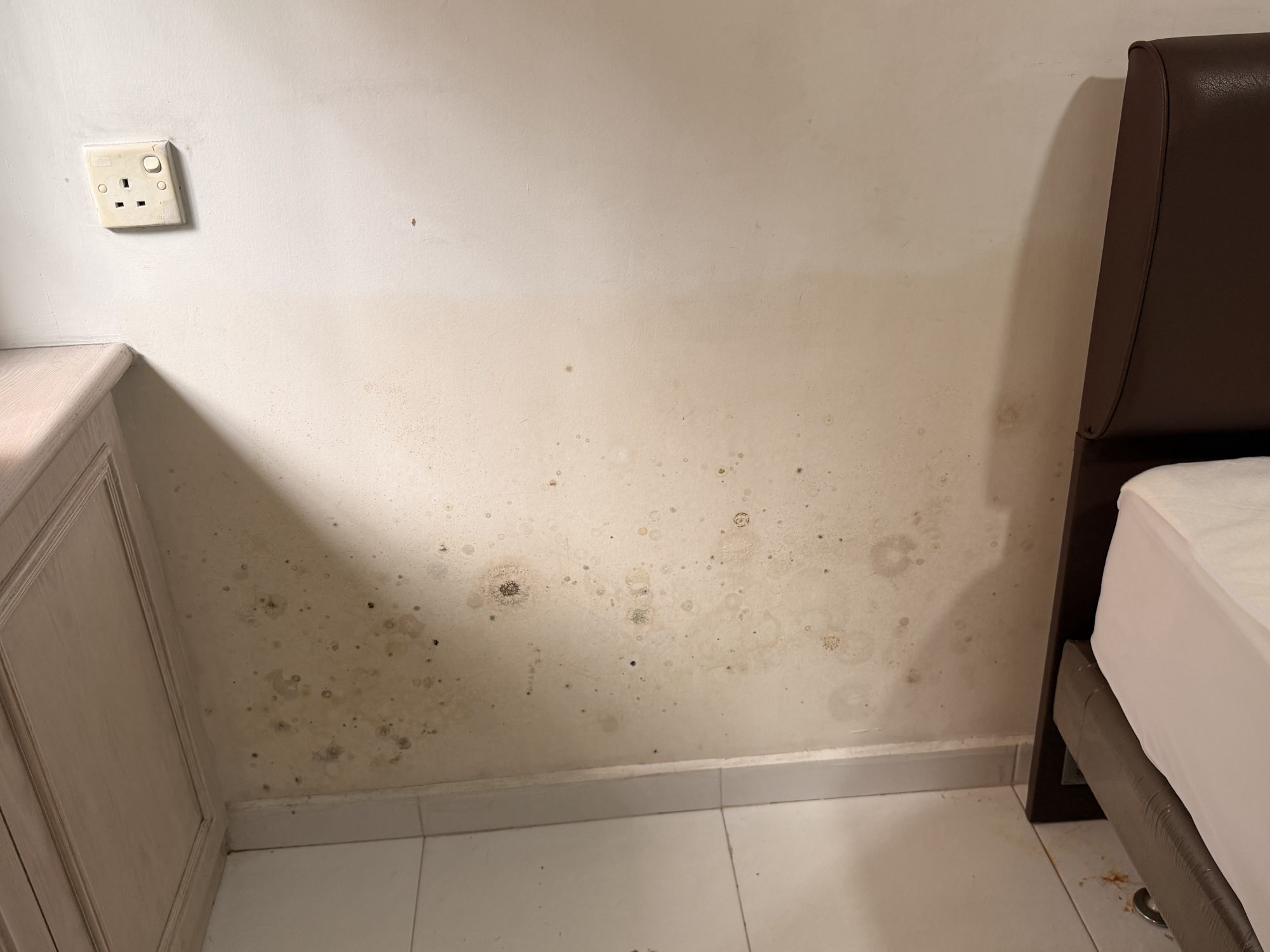
If a surface has active mould growth, a biofilm that has built up over months, or an organic load that has not been properly cleaned, the coating goes on top of the problem rather than resolving it. In those cases, mould and bacteria remediation should come first. The coating is then applied to a clean, prepared surface and provides the residual protection going forward.
Similarly, if there has been a confirmed contamination event such as a positive case or a spill of biological material, bio-decontamination is the appropriate immediate response. The coating is a protective layer for everyday ongoing use, not an emergency response tool.
Reading the regulatory approvals behind a log-reduction claim
Approvals matter because they represent independent, standardised testing against defined criteria, not just a supplier's own data. The AEGIS Microbe Shield holds approvals under Health Canada PCP# 15133, US EPA reg. 64881-1 & 64881-7, EU PT-7 & PT-9 (REACH) and UK PT-2. These are product-type designations that cover antimicrobial treated articles and surface disinfectants under different regulatory frameworks.
For a clinic or healthcare setting in Singapore, the relevant question is not just "what log reduction was achieved" but "under what standard was it tested, by whom, and is the approval still current". Approvals from the US EPA and Health Canada in particular require submission of independent laboratory data, not self-reported figures.
The technical library on the Aegis site carries the supporting test data for the AEGIS Microbe Shield. If you are comparing proposals, ask every supplier for their approval numbers and their underlying test reports.
Field verification: checking what you actually have on your surfaces
One claim that is often made and rarely substantiated is that a treated surface remains active over time. The AEGIS Microbe Shield can be field-verified using the bromophenol-blue (BPB) test. The BPB dye carries a negative charge; when applied to a correctly treated surface, it binds visibly, confirming the positive charge is still present and the coating is intact. This is verifiable in the field, not just in a laboratory.
This matters for ongoing assurance, particularly in high-traffic areas where surfaces are cleaned frequently. It also matters for accountability: if a supplier cannot demonstrate that their treated surface is still active six months after application, the residual protection claim is untestable. Related: how a positively-charged antimicrobial surface coating ruptures bacteria on contact explains the charge mechanism in more detail.
For facilities teams in clinics, schools and food-premises that need documented evidence for audits or infection-control programmes, understanding what disinfection versus a coating actually delivers for an F&B operator's audit is a useful companion read.
Frequently asked questions
Is a 3-log reduction enough for a clinic or healthcare setting?
For most clinical surfaces, a 3-log reduction from a one-off disinfectant is a baseline, not a target. The meaningful question is what the surface bioburden is, how quickly it rebuilds after a clean, and whether there is residual protection between cleans. A non-leaching coating that keeps the surface hostile to microbes continuously adds a layer that a periodic wipe-down cannot replicate.
Will normal cleaning remove the AEGIS Microbe Shield coating?
The coating bonds covalently to the surface, so routine cleaning with standard hospital-grade or commercial cleaners does not remove it. It is designed to remain active for the life of the treated surface under normal cleaning regimes. The BPB field test can confirm the coating is still present and active after cleaning. For detail on this, the article on whether cleaning removes an antimicrobial surface coating covers it directly.
How do I know the log-reduction figure a supplier quotes applies to my actual surfaces?
Ask for the test report, not just the summary number. Key questions: what material was the coupon, what organism, what contact time, and at what temperature and humidity? Then ask whether the supplier can field-verify the coating on your surfaces after application. If they cannot, the figure is a lab result with no demonstrated link to what you actually have.
Can the coating be applied on top of existing disinfection procedures?
Yes, and the two work together. A disinfection cycle reduces the bioburden at the time of cleaning; the coating provides residual protection between cleans. They are not competing approaches. For settings with a regular disinfection programme, adding a surface coating fills the gap the programme cannot close: the hours between scheduled cleans when surfaces are in active use.
What happens on a surface that has not been properly cleaned before coating?
The coating bonds to whatever it is applied to. If the surface has organic residue, grease or biofilm, the coating bonds to that layer rather than directly to the substrate, and its longevity and charge density will be compromised. Preparation matters. On surfaces with significant contamination, remediation comes before coating, not after.
A log-reduction figure on a data sheet is a starting point for a conversation, not the end of one. The surface, the bioburden, the preparation, and the ongoing verification are the factors that determine whether your facility is genuinely protected or simply documented as having been treated.
Speak to Aegis Asia about your surfaces
If you are evaluating surface protection options and want to understand what the AEGIS Microbe Shield can deliver for your specific premises, we are happy to walk through the options with you.
Request a Quote · Call 6241 9443 · WhatsApp 9222 9222 · Email info@aegisasia.com
Get a free quote