
Non-leaching vs leaching antimicrobials: why the difference matters for a Singapore facilities manager
You're reviewing a supplier datasheet for a surface treatment. It says "antimicrobial" on the front page, which sounds straightforward. Then you see the term "non-leaching" in the fine print, or maybe "sustained release", and you wonder whether that changes anything for your procurement decision.
It does. The mechanism behind the antimicrobial activity determines whether protection lasts for the life of the surface or wears off within weeks. It also determines whether the active ingredient migrates onto skin, food or the environment, and whether repeated use risks selecting for resistant microbial strains.
This is a genuinely important technical distinction, and most marketing materials gloss over it. Here is a plain explanation.
Why this matters: The difference between a leaching and a non-leaching antimicrobial coating determines whether your surfaces are protected between cleans or only for a short window after application.
Highlights
- A leaching antimicrobial works by releasing a biocide into the surrounding environment; protection diminishes as the active ingredient is used up or washes away.
- A non-leaching antimicrobial bonds permanently to the surface and acts on microbes through a physical mechanism, so it is not consumed and does not deplete.
- Leaching treatments can transfer active ingredients to skin, food-contact surfaces and the environment, raising both regulatory and practical concerns.
- Repeated use of leaching biocides carries a recognised risk of selecting for resistant strains, because sub-lethal concentrations remain as the treatment degrades.
- The AEGIS Microbe Shield is a non-leaching silane quaternary-ammonium micropolymer: it bonds to the surface and ruptures microbial cell membranes on contact, giving residual protection between cleans for the life of the treated surface.
- Approved under Health Canada PCP# 15133, US EPA reg. 64881-1 & 64881-7, EU PT-7 & PT-9 (REACH) and UK PT-2.
How a leaching antimicrobial works, and where it falls short
Most conventional antimicrobial treatments operate by releasing a biocidal chemical into the immediate environment around the surface. Silver ions, triclosan and many quaternary-ammonium formulations in spray-and-wipe products work this way. The active ingredient diffuses outward, comes into contact with microbes and disrupts them.
The problem is straightforward: the treatment is finite. As the biocide leaches out, the reservoir depletes. On a busy clinic reception desk or a school canteen tabletop, this can happen within days or even hours under frequent cleaning. What began as an antimicrobial surface becomes an ordinary one, with no visible indication to the facilities team.
The transfer and resistance concerns
There is a secondary problem that procurement teams sometimes overlook. As the biocide leaches, it does not stay on the surface. It migrates onto hands, food-contact areas, cleaning cloths and drainage systems. On a food-prep counter or a childcare surface, that transfer is exactly what you want to avoid.
The World Health Organization's position on antimicrobial resistance makes clear that sub-lethal exposure to biocides is a recognised driver of resistance selection. A leaching treatment that is gradually running out does not maintain a consistent kill concentration; it maintains a declining one. That declining gradient is the environment in which resistant strains can emerge and persist.
How a non-leaching antimicrobial works differently
A non-leaching antimicrobial takes a different approach entirely. Instead of releasing a chemical, it bonds to the surface at a molecular level and operates as a physical structure.
The AEGIS Microbe Shield is a silane quaternary-ammonium micropolymer. The silane component anchors the molecule to the surface through a covalent bond; the quaternary-ammonium component presents as a positively charged spike. Microbial cell membranes carry a negative charge. When a bacterium, mould spore or fungus contacts the surface, the electrostatic attraction draws it onto the spike, which physically ruptures the cell membrane.
What "non-leaching" actually means in practice
Because nothing is released, there is nothing to deplete. The coating does not get used up when it acts on a microbe; the physical structure remains intact and active. This is why how the AEGIS treatment works is genuinely different from a spray-and-wipe: the surface itself becomes the active agent, providing residual protection between cleans for the life of the treated surface.
It also means there is no transfer to skin, no migration into drainage, and no declining concentration gradient. The mechanism is consistent from day one to the end of the surface's life.
|
Feature |
Leaching antimicrobial |
Non-leaching (AEGIS Microbe Shield) |
|---|---|---|
|
How it works |
Releases biocide into surroundings |
Physical rupture on contact |
|
Depletes over time |
Yes |
No |
|
Active ingredient transfers to skin/food |
Risk present |
None |
|
Resistance selection risk |
Recognised concern |
Minimal (physical mechanism) |
|
Protection between cleans |
Diminishes |
Residual, for the life of the surface |
|
Field-verifiable |
Typically not |
Yes, by BPB test |
|
Regulatory approvals |
Varies |
Health Canada PCP# 15133, US EPA 64881-1 & 64881-7, EU PT-7 & PT-9, UK PT-2 |
When remediation comes first, and what a coating cannot do
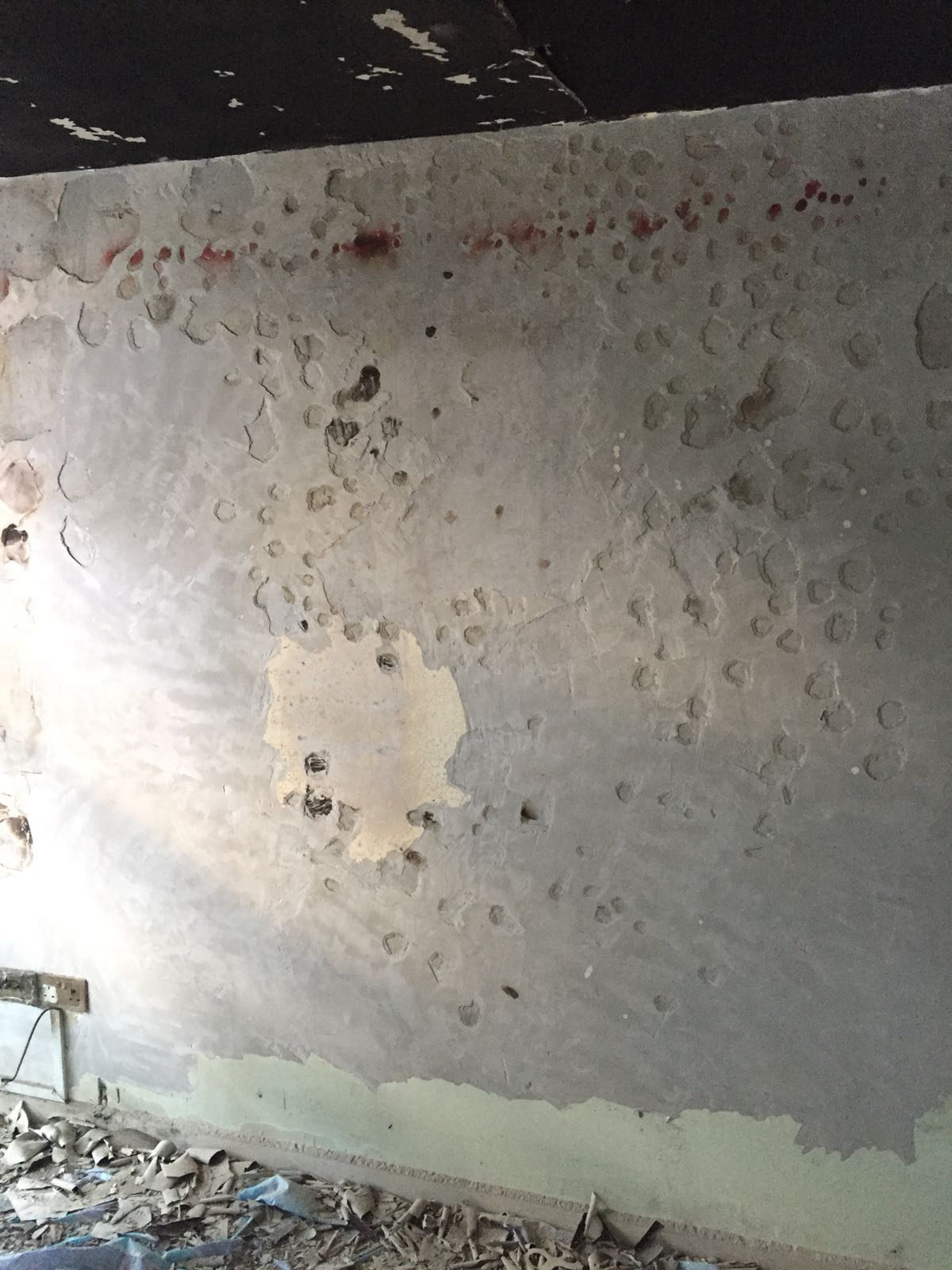
A non-leaching antimicrobial coating protects the surfaces it is applied to. It cannot fix an active mould source, a water ingress problem or a contaminated HVAC system. If your building has visible mould or an identified contamination source, mould and bacteria remediation should come before any coating programme. Applying a coating over active mould growth will not address the root cause.
Similarly, if a space has been subject to a confirmed outbreak, bio-decontamination is the appropriate first response, followed by coating for ongoing protection. The coating is a long-term surface treatment, not an emergency decontaminant.
For most commercial and institutional facilities in Singapore where the goal is reducing bioburden on high-touch surfaces between routine cleans, a non-leaching coating applied correctly and verified by BPB test is the right tool. Clinics, childcare centres and food-premises operators will find the transfer-free, non-depleting profile particularly relevant. You can read more about high-touch surface risks in a clinic and about why childcare centres need residual surface protection in our related articles.
What you can manage yourself: routine disinfection of high-touch surfaces with an approved product, and keeping a treatment log. What warrants a professional assessment: any surface where you want verifiable, long-term antimicrobial protection, or where standard disinfection alone is not holding the bioburden down.
Frequently asked questions
Does a non-leaching coating replace routine cleaning and disinfection?
No. The coating provides residual antimicrobial protection between cleans, but it does not remove soil, grease or other surface contamination. Routine cleaning should continue as normal. The coating works alongside your disinfection programme, not instead of it, reducing the microbial load that builds up between scheduled cleans.
How do we know the coating is still active on the surface?
The bromophenol-blue (BPB) field test provides visible, on-site verification that the positive charge is present and the coating is intact. It does not require a laboratory sample and can be done at any point after application. This is one of the practical advantages of a non-leaching coating over a leaching one, which has no equivalent field verification.
Is the coating safe on food-contact and childcare surfaces?
Because the AEGIS Microbe Shield is non-leaching, the active ingredient does not transfer from the surface to food, skin or the surrounding environment. It is used on food-prep counters, childcare furniture and medical surfaces. The product carries regulatory approvals under Health Canada PCP# 15133, US EPA reg. 64881-1 & 64881-7, EU PT-7 & PT-9 (REACH) and UK PT-2, and can be applied to plastic, wood, metal, glass and textiles.
How long does the protection last?
The coating bonds to the surface at a molecular level and provides residual protection for the life of the treated surface under normal use. It does not wash off with routine cleaning. If a surface is abraded, repainted or replaced, retreatment would be needed. A BPB verification can confirm it is still active at any point.
Can it be applied to any surface in our premises?
The AEGIS Microbe Shield works on plastic, wood, metal, glass and textiles. Most commercial high-touch surfaces, including door handles, handrails, lift buttons, desk surfaces, chairs and soft furnishings, fall within those materials. Surfaces that are actively contaminated with mould or require remediation should be treated first before coating is applied.
Ready to protect your surfaces? Request a quote, call us on 6241 9443, WhatsApp 9222 9222, or email info@aegisasia.com.
Get a free quote